
In the field of electrical engineering and architectural lighting design, the selection of a light source is never merely a matter of aesthetics. It is a calculation of Correlated Color Temperature (CCT), Color Rendering Index (CRI), and spectral power distribution. Whether specifying for a commercial high-bay application or a residential retrofit, understanding the physics behind types of light bulbs colors is critical for visual acuity, energy efficiency, and biological compliance.
This guide moves beyond basic definitions to explore the technical nuances of lighting spectrums, providing the data necessary to make informed engineering decisions.
To understand the visible difference between light sources, we must look at the Kelvin scale. The color temperature of a light bulb is derived from the concept of a "black body radiator." When a theoretical black body is heated, it emits light that changes color as the temperature rises—from red to orange, to yellow, to white, and finally to blue.
While incandescent filaments actually heat up to produce light (thermal radiation), LED technology uses phosphors to mimic these colors. Therefore, we use the term Correlated Color Temperature (CCT).
Engineers and lighting designers rely on the warm white kelvin chart to categorize these thermal appearances. Unlike standard consumer charts, a technical breakdown considers the specific wavelength dominance.
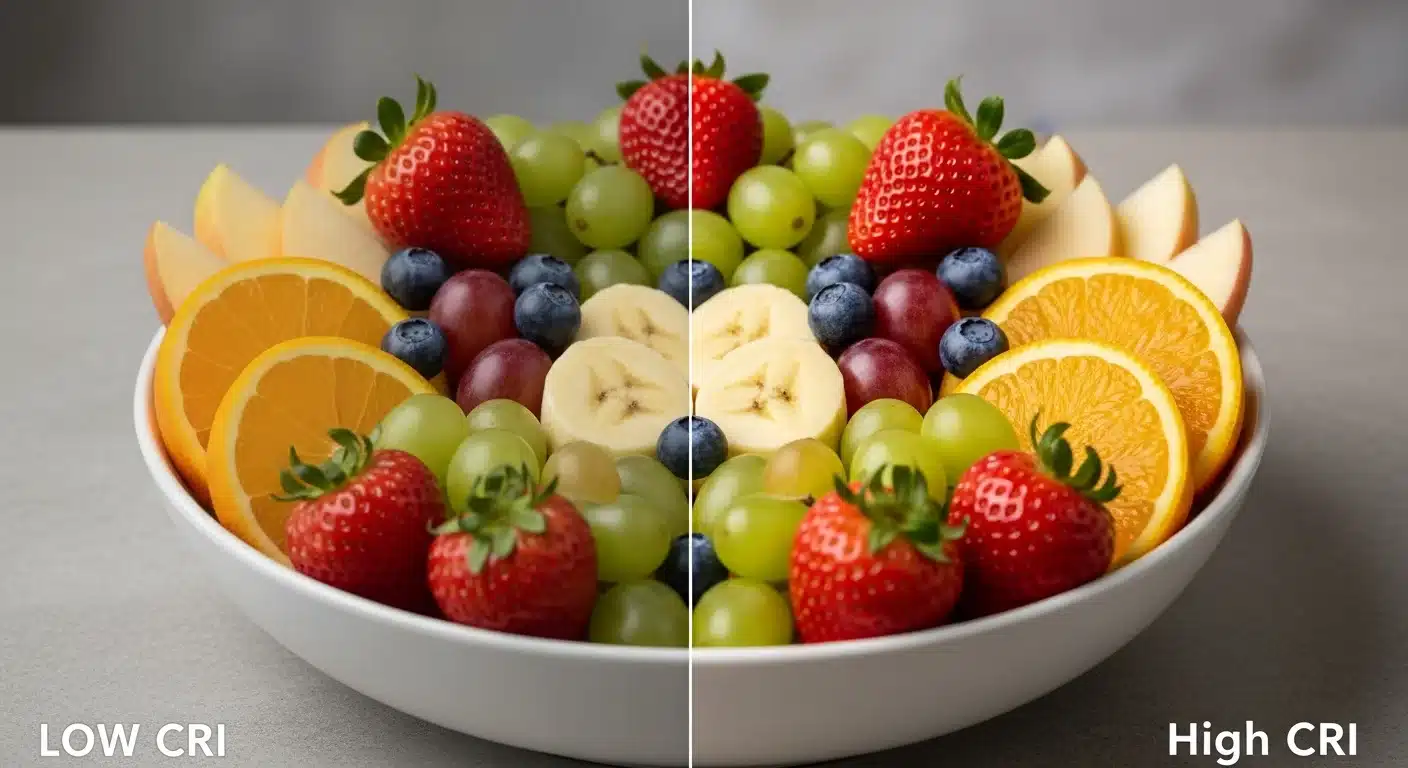
| CCT Range (Kelvin) | Industry Terminology | Spectral Dominance | Primary Application |
|---|---|---|---|
| 1800K - 2400K | Candlelight / Dimmed | Red/Infrared | Vintage aesthetic, circadian preparation |
| 2700K - 3000K | Soft / Warm White | Red/Orange/Yellow | Residential ambient, hospitality |
| 3500K - 4100K | Neutral / Bright White | Balanced Green/Yellow | Retail, bathrooms, garages |
| 4500K - 5000K | Cool White | Blue/Green | Commercial offices, kitchens, grocery |
| 5000K - 6500K | Daylight | High Blue Spike | Industrial, graphic arts, medical |
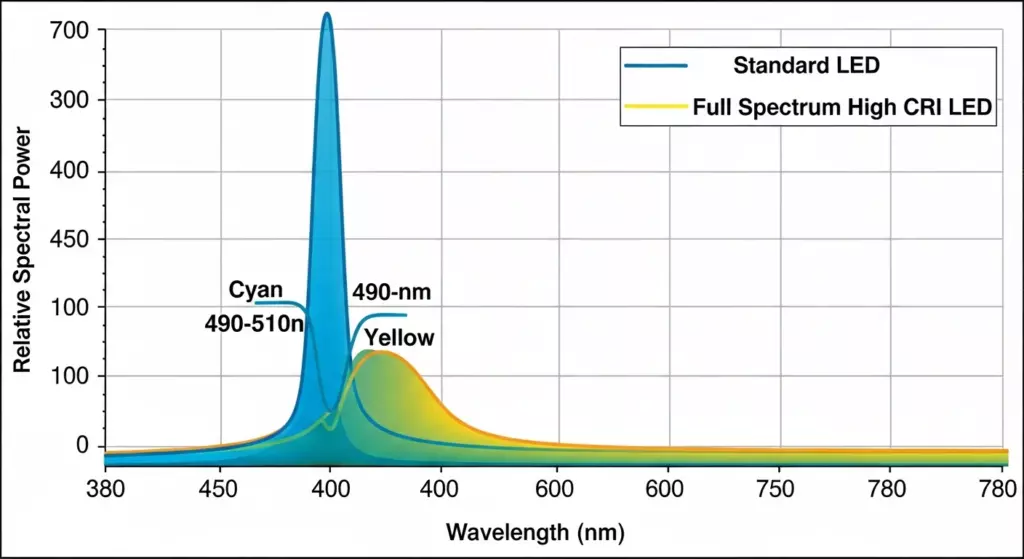
The debate of warm white vs cool white vs daylight is fundamentally a discussion about the Spectral Power Distribution (SPD).
Confusion often arises in retail nomenclature. When comparing daylight vs bright white vs soft white, refer to the specific Kelvin value rather than the marketing label:
A common question in lighting design is which is brighter cool white or warm white? The answer involves differentiating between luminous flux (measured in lumens) and perceived brightness.
Technically, if two LEDs have the same wattage and efficiency, a Cool White LED will often output slightly more lumens than a Warm White LED. This is due to the "Stokes Shift"—converting the blue LED pump light to warm light requires more phosphor density, resulting in slightly higher energy loss (lower efficacy).
Furthermore, the human eye reacts differently to these spectrums. The eye has two types of photoreceptors: rods (scotopic vision, sensitive to blue/green) and cones (photopic vision, sensitive to detail/color). Cool white light activates the scotopic vision more effectively, creating a higher perceived brightness, even if the measured lumens are identical.
To determine the actual efficiency of a fixture, engineers use the Luminous Efficacy formula.
$$ \eta = \frac{\Phi}{P} $$
Where:
* $ \eta $ (Eta) = Luminous Efficacy (lumens per watt, lm/W)
* $ \Phi $ (Phi) = Luminous Flux (lumens)
* $ P $ = Power consumption (watts)
Example Scenario:
A kitchen requires an illuminance ($ E $) of 500 Lux on a counter surface area ($ A $) of 3 square meters.
First, calculate the required Total Luminous Flux ($ \Phi $):
$$ \Phi = E \times A $$
$$ \Phi = 500 \text{ lux} \times 3 \text{ m}^2 = 1500 \text{ lumens} $$
If choosing between a Warm White LED (80 lm/W) and a Cool White LED (95 lm/W), the power requirements differ:
For Warm White:
$$ P_{warm} = \frac{1500}{80} = 18.75 \text{ Watts} $$
For Cool White:
$$ P_{cool} = \frac{1500}{95} = 15.78 \text{ Watts} $$
Result: The Cool White source is technically more efficient and creates higher perceived brightness for the task.
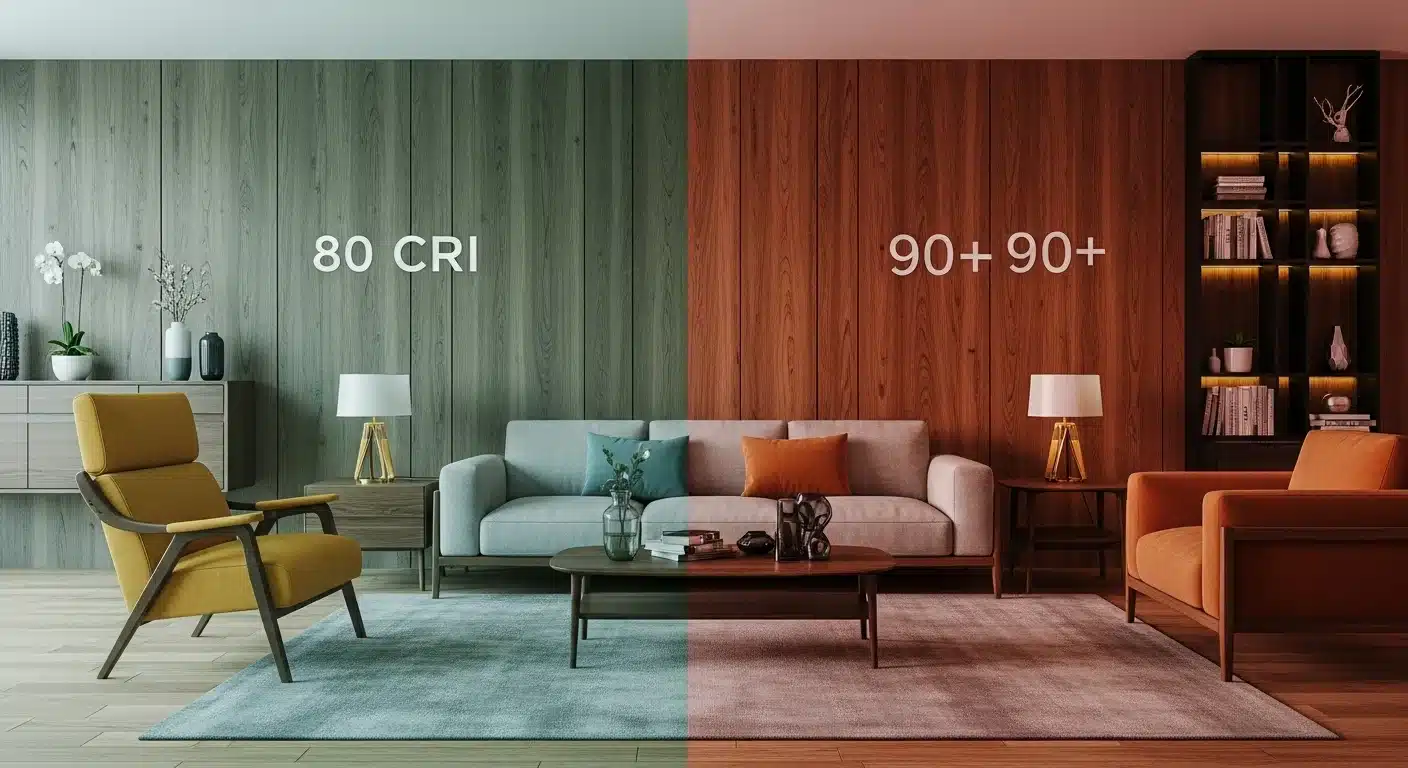
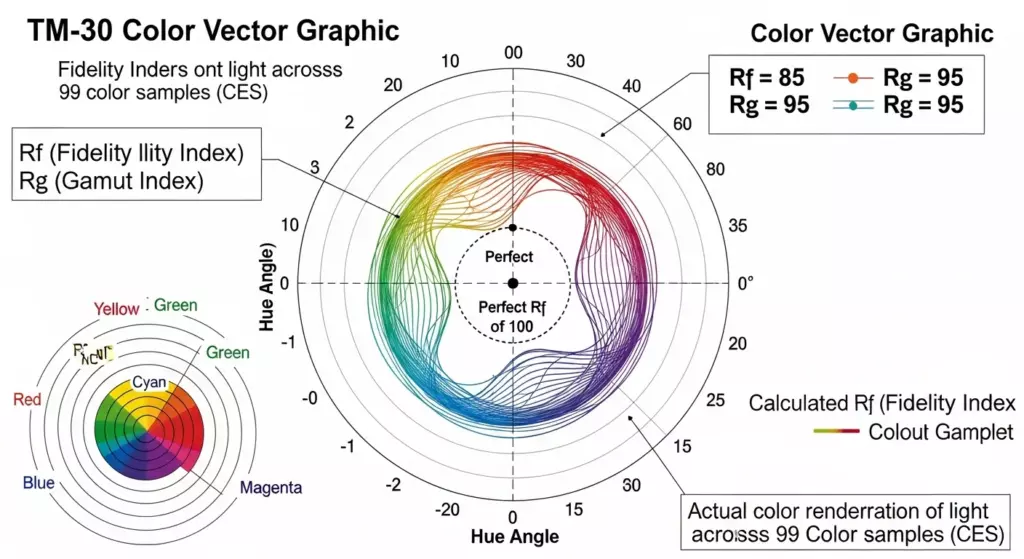
When deciding warm white or cool white for kitchen applications, a layered approach is the industry standard. A kitchen is a hybrid space: it is a laboratory for food preparation (requiring high color fidelity and contrast) and a social space (requiring ambiance).
The cool white vs warm white color temperature discussion extends to human biology. High-Kelvin light (Cool White/Daylight) suppresses melatonin production, promoting alertness. Low-Kelvin light (Warm White) allows melatonin secretion, aiding sleep cycles.
While they seem similar, the difference between cool white and daylight is significant in professional environments:
* Cool White (4100K): Standard for offices. It reduces eye strain compared to daylight but maintains focus.
* Daylight (6500K): Used for color matching (print shops, auto body). In a residential setting, pure daylight bulbs can appear harsh and clinical, often giving interiors a sterile, blue cast.
For clients asking what does warm white look like, describe it as the "golden hour" light. It is soft, forgiving on skin tones, and creates a sense of thermal warmth. Unlike the sterile white of a smartphone screen, warm white casts yellowish highlights. It is the color of relaxation.
Use this checklist before finalizing your lighting schedule:
