
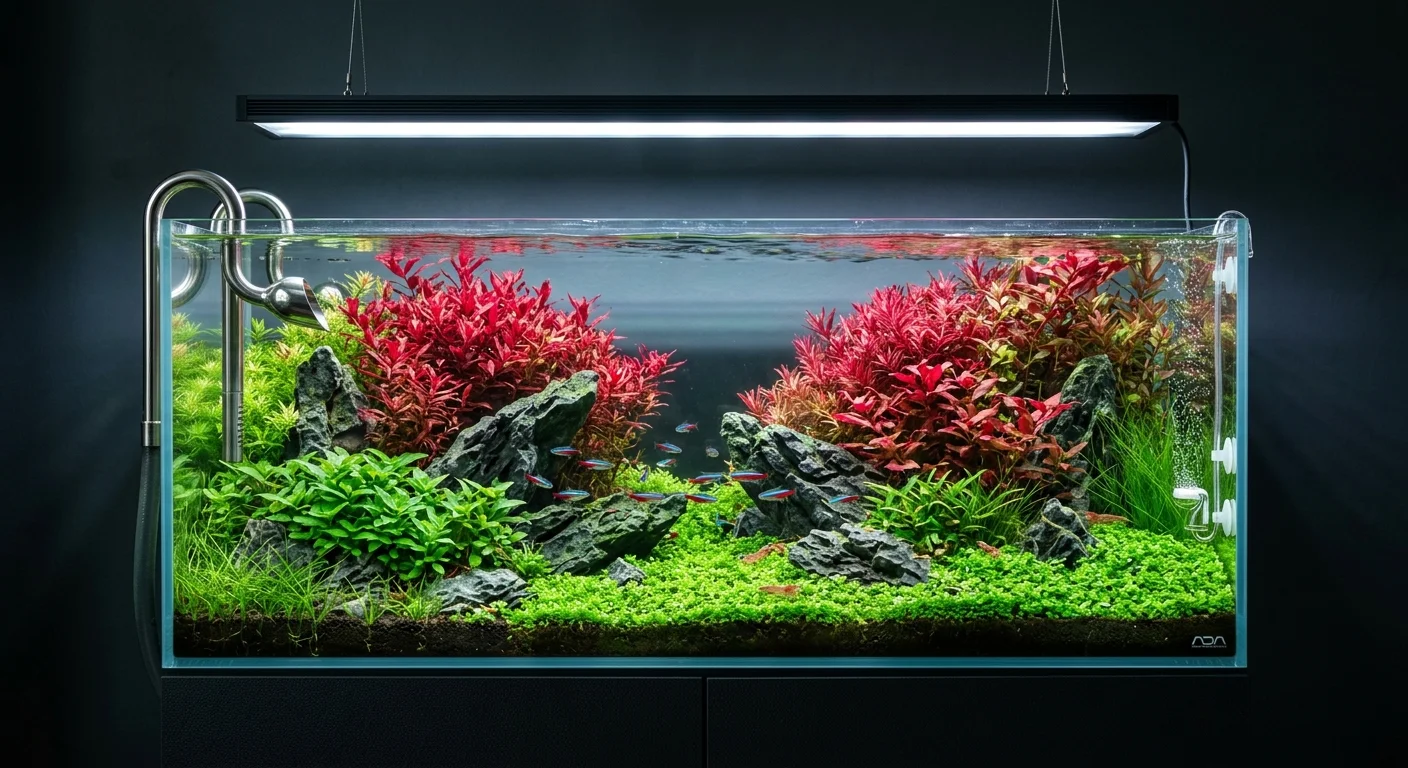
The cultivation of sub-aquatic flora within closed ecosystems represents a highly rigorous intersection of limnology, optical physics, and advanced horticultural engineering. Historically, the architectural and maintenance methodologies applied to artificial aquatic habitats relied on primitive, fundamentally flawed heuristics—most notably the "Watts per Gallon" rule or generalized lux measurements. These legacy paradigms were rooted in anthropocentric observation, treating artificial lighting merely as a mechanism for human visual clarity rather than a critical vector for metabolic regulation and ecological stabilization.
The modern horticultural engineer recognizes that a generic light for aquarium deployment—typically engineered with phosphor-coated white LEDs designed to peak at ~555 nanometers (the maximum sensitivity of the human eye)—is entirely inadequate for high-density botanical systems. Such fixtures excel in generating high luminous flux (lumens) but fail catastrophically at delivering biologically viable energy. This realization has driven a profound paradigm shift towards utilizing a purpose-built planted aquarium light, which abandons human-centric metrics in favor of Photosynthetically Active Radiation (PAR) and, more crucially, Photosynthetically Usable Radiation (PUR).
To synthesize an optimal sub-aquatic environment, engineers must account for the physical attenuation of electromagnetic radiation through a liquid medium. The energy of an individual photon dictates its penetration capacity, a relationship formalized by the Planck-Einstein relation:
$$ E = \frac{hc}{\lambda} $$
Where $E$ is photon energy, $h$ is Planck's constant, $c$ is the speed of light, and $\lambda$ is the wavelength. Because red light (600–700 nm) possesses a longer wavelength and lower energy state, it is rapidly absorbed and dissipated as thermal energy within the first meter of a water column. Consequently, surface-mounted LED arrays must be engineered with disproportionately high-output red channels to overcome this selective spectral filtering and ensure adequate irradiance reaches carpeting flora at the substrate level.
The transition from legacy fluorescent technologies to discrete LED architectures requires rigorous evaluation of spectral efficiency, thermal management, and long-term diode degradation (measured via standard industry metrics such as $L_{70}$, conforming to IEC-62717 standards for LED module performance).
| Topology Generation | Core Metric Focus | Spectral Efficiency (PUR vs PAR) | Field Lifespan ($L_{70}$) | Photobiological Application & Engineering Verdict |
|---|---|---|---|---|
| High-Output Fluorescent (T5HO) | Watts / Lumen Output | Low/Moderate: Broad emission, high waste in green/yellow gap. | ~8,000 to 10,000 Hours (Requires frequent tube replacement) | Legacy. Excellent diffuse coverage but high thermal output and rapid spectral degradation. Inefficient for modern aquascaping. |
| Standard "White" LED (Phosphor-Coated) | Lumens / Visual Brightness | Low: Massive PAR values driven by 550nm spikes, but highly deficient in 660nm (Deep Red). | ~30,000 to 40,000 Hours | Sub-optimal. Functions well as a generic light for aquarium fish, but causes stem elongation and poor pigmentation in advanced flora. |
| Discrete WRGB LED (e.g., Chihiros, ADA) | PUR / Action Spectrum Matching | Extremely High: Targeted emissions at 450nm (Blue) and 660nm (Red) perfectly match chlorophyll absorption peaks. | ~50,000+ Hours (Dependent on active/passive thermal heat sinking) | Industry Standard. Allows for precise morphological control, maximum anthocyanin expression, and intense aesthetic color rendering (CRI >90). |
When specifying a planted aquarium light, professionals must also evaluate the fixture's integration with automated photoperiod controllers. Sudden shifts in irradiance cause immediate stomatal stress. Implementing a gradual ramp-up/ramp-down sequence (typically 45–60 minutes) mimics the natural diurnal cycle, mitigating photic shock and maintaining the rigid circadian rhythms required for optimal carbon dioxide assimilation.
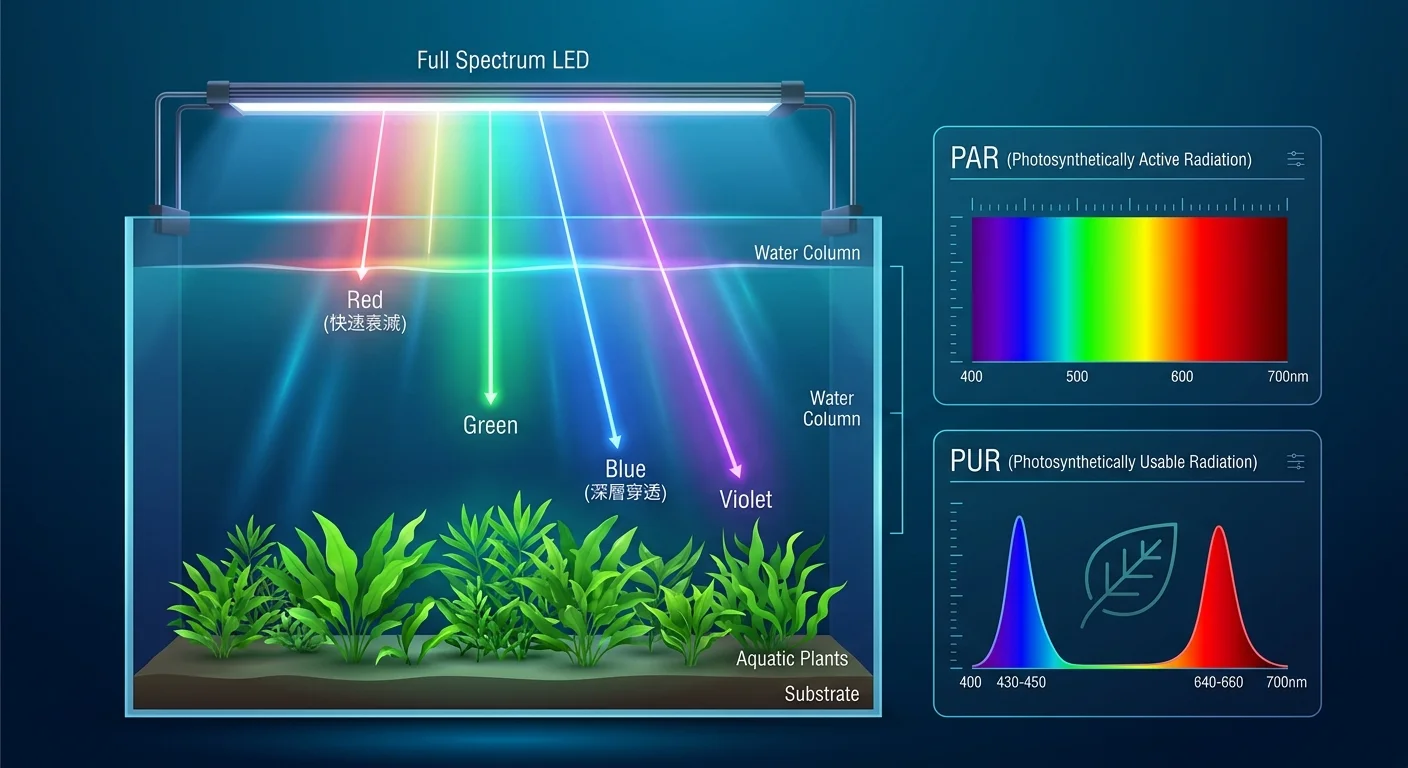
The propagation of electromagnetic radiation through a liquid medium is governed by strict physical laws that fundamentally alter its spectral composition. When photons penetrate the air-water boundary layer, they are subjected to immediate selective absorption and Rayleigh/Mie scattering. This attenuation is highly wavelength-dependent, governed by the Planck-Einstein relation:
$$E = \frac{hc}{\lambda}$$
Where $E$ is photon energy, $h$ is Planck's constant, $c$ is the speed of light, and $\lambda$ is the wavelength. Because energy is inversely proportional to wavelength, lower-energy, longer wavelengths (reds and infrareds, >600 nm) are rapidly absorbed and dissipated as thermal energy by water molecules. Higher-energy, shorter wavelengths (blues and violets, 400–500 nm) maintain structural integrity at greater depths. Even in the shallow micro-ecosystem of a planted aquarium (typically 0.3 to 0.6 meters deep), the presence of dissolved organic compounds (DOM) and suspended particulates exacerbates this selective filtration. Consequently, engineering the baseline light spectrum requires artificially amplifying the 660 nm (deep red) waveband to guarantee sufficient high-efficiency photon delivery to benthic, low-growing carpet flora like Hemianthus callitrichoides.
Historically, the industry relied on anthropocentric photometric units (Lumens/Lux) mapped to the human eye's peak sensitivity at 555 nm (green-yellow). For aquatic horticulture, these metrics are entirely obsolete. The evaluation of an aquarium plant light spectrum demands biologically relevant, spectroradiometric quantization.
The following table contrasts the theoretical metrics with their practical constraints, specialized measurement hardware, and real-world engineering utility.
| Metric / Standard | Scientific Definition | Required Measurement Hardware | Engineering Utility | Field Installer / Biologist Feedback |
|---|---|---|---|---|
| Lumens / CRI | Visually perceived brightness and color accuracy (human-centric). | Integrating Sphere / Lux Meter | Tuning aesthetic color rendering (CRI > 90 preferred). | Irrelevant for growth. High-lumen, "cool white" commercial LED floods often starve high-demand red stems. |
| PAR (PPFD) | Total photon flux (400–700 nm) reaching 1 $m^2$ per second. | Quantum Sensor (e.g., Apogee SQ-520) | Establishing baseline intensity requirements (e.g., >80 $\mu mol$ for demanding species). | Deceptive if used alone. Cheap fixtures inflate PAR using highly efficient green diodes, yielding terrible biological results. |
| PUR | Fraction of PAR efficiently absorbed by specific target photopigments. | Spectroradiometer (e.g., Sekonic C-800 or Asensetek) | Optimizing diode selection; maximizing biological yield per electrical watt. | The true benchmark. Installers note that a 50 $\mu mol$ PUR-optimized WRGB light vastly outperforms a 100 $\mu mol$ generic white LED. |
| PAS | Rate of physiological response across the spectrum. | Laboratory Respirometry / Fluorometry | Engineering discrete biological triggers (e.g., UV-A for anthocyanin synthesis). | Used primarily in R&D. Critical for tuning exact diode binning during the manufacturing of high-end RGB arrays. |
PRO-TIP: Thermal Degradation and Spectral Shift
Field engineers consistently report a hidden pitfall in high-output aquatic lighting: inadequate thermal management. The forward voltage and resulting emission spectrum of high-power discrete red diodes (660 nm) are highly sensitive to junction temperature ($T_j$). If a fixture's heatsink is undersized, the diode temperature exceeds 85°C, causing a documented "spectral shift" where the peak emission drifts by 5–10 nm and relative quantum efficiency drops by up to 20%. When evaluating fixtures, verify compliance with IEC 60598-1 (Luminaires – General requirements) and ensure optical lenses are rated IP67 (under IEC 60529) to prevent moisture ingress from permanently altering the internal refractive index of the primary optic.
The definitive goal in modern aquatic engineering is not merely to illuminate the water column, but to deploy a highly tuned, metabolically active spectrum. By synthesizing a spectral power distribution that precisely matches the PAS of higher vascular plants, aquarists effectively weaponize light—maximizing morphological density and specific phenotypic expressions while simultaneously inducing competitive exclusion against rudimentary algal phyla.

Determining exactly what color light is best for aquarium plants requires abandoning the search for a singular, monochromatic answer. The best light color for aquarium plants is a dynamically engineered polychromatic spectrum—specifically tuned to the target organism's Photosynthetically Usable Radiation (PUR) profile. Aquatic horticultural engineering relies on manipulating discrete electromagnetic wavebands, each triggering highly specific biochemical pathways and structural phenotypes.
To effectively tune a commercial LED array, engineers rely on a plant light spectrum chart, which overlays a plant's Photosynthetic Action Spectrum against the actual Spectral Power Distribution (SPD) of the light fixture. A properly calibrated chart will display two massive spikes of biological utility: one at ~450 nm (blue) and a secondary, higher peak at ~660 nm (deep red), separated by a wide saddle spanning the green/yellow bands (500–600 nm). Installers should utilize spectrometer applications or PAR meters to ensure their fixture’s output curve aggressively matches this biomimetic profile rather than human-centric lumen curves.
Professional aquatic system installers operating under stringent electrical and photobiological safety standards (e.g., IEC 62471 for LED safety, IP67 for aquatic ingress protection) must balance raw PAR metrics with long-term ecological stability.
| Waveband / Target (nm) | Primary Biological Response | Commercial Diode Standard | Installer Feedback & Field Experience |
|---|---|---|---|
| Near-UV (390 nm) | Anthocyanin synthesis (Red coloration) | Seoul Viosys UV-A | Pro-Tip: Highly effective, but degrades acrylic splash guards over time. Requires premium borosilicate glass shielding to prevent lens yellowing. |
| Royal Blue (450 nm) | Compact growth, internodal shortening | Cree XLamp XP-E2 | Essential for carpeting plants (Hemianthus callitrichoides). Warning: Pushing the blue channel >25% on fixtures like the Chihiros WRGB II frequently triggers green dust algae (GDA) on tank glass. |
| Green (530 nm) | Deep canopy photosynthesis, High CRI | Lumileds LUXEON | Neglected in older terrestrial "blurple" grow lights. Installers note that maximizing green channels neutralizes harsh magenta hues, instantly satisfying clients' visual expectations. |
| Deep Red (660 nm) | Maximum carbohydrate synthesis | Osram Oslon SSL | The critical growth engine. Field tuning typically locks the red channel at 100% on tunable fixtures. Produces aggressive stem elongation. |
| Far-Red (730 nm) | Emerson Effect, nocturnal reset | Samsung LM301H (Evo) | Extremely rare in consumer aquatic LEDs. Installers retrofitting far-red strips report 15-20% faster biomass accumulation, though it can induce unwanted "leggy" growth if not balanced with heavy blue light. |
Field Engineering Directive: Do not utilize raw electrical wattage or luminous flux (lumens) to evaluate horticultural lighting efficacy. When commissioning a new high-energy planted ecosystem, tune the RGB output to achieve an approximate 50:20:30 (Red:Blue:Green) ratio. This ensures maximal PAR delivery to the $P_r$ phytochromes while maintaining a visually crisp, daylight-equivalent rendering for the livestock. Ensure all submersible or canopy-mounted arrays strictly adhere to IP67 standards to prevent diode corrosion from highly humid microclimates.
The cultivation of a high-energy aquatic ecosystem is defined by a continuous, ruthless competition for photic and chemical resources. The evolutionary divergence between higher-order vascular plants and opportunistic algae dictates their respective light-harvesting mechanisms. Higher aquatic plants rely almost exclusively on chlorophyll $a$ and $b$, limiting their peak quantum efficiency to the discrete red (~660 nm) and blue (~450 nm) wavebands. Conversely, algal phyla possess a diverse biochemical arsenal of accessory pigments, allowing them to exploit the "green gap" (500–600 nm) that vascular foliage largely reflects or transmits.
Attempting to eradicate algae by artificially suppressing specific spectral wavebands is a fundamental engineering fallacy. The specialized pigments found in nuisance algae grant them an incredibly broad Photosynthetic Action Spectrum (PAS):
Because their absorption bandwidths overlap heavily with or entirely envelop those of vascular plants, any spectral manipulation severe enough to halt algal photosynthesis will inevitably plunge higher plants into a state of severe light deprivation.
The biologically sound approach relies on the principle of competitive exclusion. Therefore, the best aquarium light to prevent algae is not a fixture designed to "starve" specific algal pigments, but rather a precisely engineered LED topology that maximizes Photosynthetically Usable Radiation (PUR) for higher-order flora. When a high-PUR spectrum forces vascular plants into exponential biomass accumulation—governed by the photosynthetic response curve $P = P_{max} \cdot \frac{\alpha I}{\sqrt{P_{max}^2 + (\alpha I)^2}}$—the plants aggressively strip the water column of critical inorganic carbon and dissolved macronutrients. This systemic dominance naturally stifles algal germination.
To operationalize competitive exclusion, engineers and aquascapers must synchronize photonic delivery with absolute chemical stability:
1. Substrate PPFD Targeting: Maintain a localized Photosynthetic Photon Flux Density (PPFD) of $60 \le I_0 \le 80 \, \mu mol \cdot m^{-2} \cdot s^{-1}$ at the substrate boundary layer. Exceeding $100 \, \mu mol \cdot m^{-2} \cdot s^{-1}$ without corresponding CO2 augmentation (rigidly held at 30–35 mg/L) guarantees opportunistic algal exploitation.
2. Constrained Photoperiods: Limit the Daily Light Integral (DLI) by restricting high-intensity illumination to 7–8 hours. Exceeding this duration triggers photoinhibition—damaging the D1 protein within Photosystem II—halting vascular carbohydrate synthesis and immediately ceding the ecosystem to algae.
To achieve the requisite PUR dominance, fixture topology is critical. The table below compares current commercial architectures regarding their efficacy in promoting vascular plant dominance over algae.
| Topology / Flagship Model | Spectral Philosophy | Est. PUR/PAR Efficiency | Lifespan ($L_{70}$) | Cost Index | Installer Field Impact / Algae Vulnerability |
|---|---|---|---|---|---|
| Phosphor White (Fluval Plant 3.0) | High green/yellow output to inflate human-perceived lumens. | ~45-55% | 40,000 hrs | $$ | Broad spectrum heavily feeds BBA and Diatoms if CO2 fluctuates. Struggles to drive deep red stem plants to competitive exclusion velocities. | | **Pure RGB** (*ADA Solar RGB*) | Fixed, massive peaks at 450nm, 550nm, 660nm. | **~85-90%** | 30,000 hrs | $$$$ | Out-of-the-box dominance. The intensely targeted red/blue peaks force extreme plant metabolism. Algae struggles to compete if nutrients are balanced. | | **Modular WRGB** (*Chihiros WRGB II Pro*) | White diodes paired with discrete R, G, B tunable channels. | **~75-85%** (Tuning dependent) | 50,000 hrs | $$$ | Maximum metabolic control. Allows aquarists to dim the green channel slightly during BBA outbreaks while sustaining high red PUR to maintain plant momentum. |
Field Experience & Installer Feedback:
Achieving a pristine, algae-free ecosystem is a function of thermodynamic balance. The lighting fixture operates as the throttle; if the applied PUR exceeds the bioavailable carbon and nutrient limits of the higher plants, the system defaults to lower-order organisms. Engineering an algae-resistant environment requires treating the light spectrum, photoperiod, and injection systems as a single, interdependent mechanical unit.
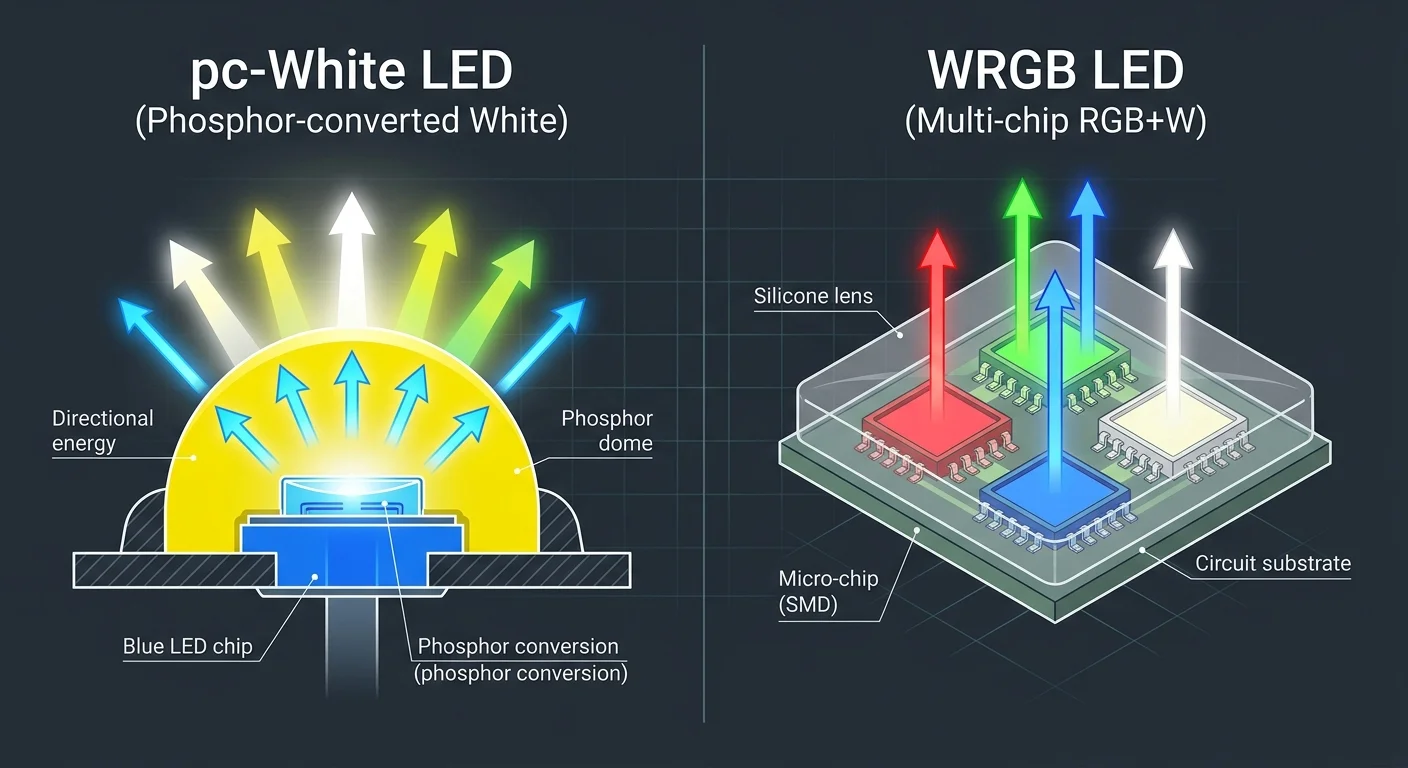
The engineering architecture of a light-emitting diode (LED) array fundamentally dictates its Spectral Power Distribution (SPD) and, consequently, its biological efficacy. When evaluating what is the best light for aquarium plants, horticultural engineers must look beyond total luminous flux (lumens) and critically analyze the diode topology. Modern commercial fixtures are broadly categorized into three distinct architectural classes: Phosphor-Converted White (pc-White), Pure RGB, and WRGB.
Standard pc-White LED arrays rely on indium gallium nitride (InGaN) blue diodes coated with a yttrium aluminum garnet (YAG) phosphor layer. As high-energy blue photons strike the phosphor, a portion of the energy is down-converted into a broad, continuous waveband peaking in the yellow-green spectrum (~550 nm). While this yields a high luminous efficacy mathematically, it severely lacks the discrete, high-intensity 660 nm deep-red spikes required for optimal chlorophyll a absorption.
Conversely, Pure RGB and WRGB topologies utilize discrete, individually powered monochromatic diodes to mathematically synthesize the lighting environment. By combining tight-tolerance blue (450 nm), green (520 nm), and deep red (660 nm) emitters, these arrays achieve an exceptionally high Photosynthetically Usable Radiation (PUR) quotient. WRGB systems go a step further by integrating dedicated white diodes alongside the RGB matrix, boosting the overall Color Rendering Index (CRI) and raw Photosynthetic Photon Flux Density (PPFD) without sacrificing the targeted spectral spikes.
Determining the best light for planted aquarium ecosystems requires matching the fixture's topology to the specific physiological goals of the aquascape. The table below analyzes the hardware architectures and field performance of the industry's leading high-output models (standardized to 90cm configurations).
| Fixture Model | Core Topology | Est. Power / Flux | Control Protocol | Installer / Field Feedback |
|---|---|---|---|---|
| ADA Solar RGB | Pure RGB | 130W / ~4250 lm | Fixed / Non-adjustable | The Gold Standard for Color: Exceptional visual depth and zero color banding. However, the lack of dimming or onboard control requires external relays. High thermal output mandates strong ambient ventilation. |
| Chihiros WRGB II | WRGB | 100W / ~6200 lm | Bluetooth App (PWM) | Maximum Modularity: Often cited as the best light for aquarium plants requiring heavy red pigment forcing. Pitfall: Granular app control often leads novices to input highly imbalanced, algae-inducing spectrums. |
| Twinstar 900S | W-RGB | 65W / ~5170 lm | Fixed Spectrum | Aesthetic Perfection: Mathematically perfected daylight simulation. Field tests show exceptional growth for standard high-tech setups. Lack of app control prevents user error but limits extreme anthocyanin forcing. |
| Fluval Plant 3.0 | pc-White + Custom RGB | 59W / ~4250 lm | Bluetooth App | High Durability: Features robust IP67 waterproofing, making it a reliable aquarium light for plants in high-humidity canopies. Drawback: Over-reliance on pc-White diodes results in a washed-out visual aesthetic compared to pure RGB competitors. |
| Week Aqua PRO | RGB + UV | 120W / ~7200 lm | Bluetooth App (PWM) | Advanced Photobiology: Integrates near-UV (395 nm) diodes. Field installers report unmatched deep red coloration in Rotala species due to UV stress-induced anthocyanin synthesis. |
When deploying aquarium lights for planted tanks, electrical safety and thermal management are as critical as spectral tuning. Closed aquarium canopies generate microclimates with near 100% relative humidity and highly corrosive ionic concentrations (especially if automated fertilizer dosing is utilized).
PRO-TIP (Field Experience): A frequent pitfall observed by professional aquascapers is the aggressive overdrive of WRGB fixtures. Because the human eye poorly perceives the intensity of deep red and blue wavelengths, users often crank programmable fixtures like the Chihiros WRGB II to 100% intensity to achieve a desired visual "brightness." This inadvertently pushes the PAR well beyond 150 $\mu mol \cdot m^{-2} \cdot s^{-1}$ at the substrate, inducing severe photoinhibition in the flora and triggering catastrophic Rhodophyta (Black Beard Algae) blooms. Always utilize a submersible PAR meter during initial commissioning, capping substrate PAR at 80-100 $\mu mol$ for the first 90 days of the ecosystem's lifecycle.
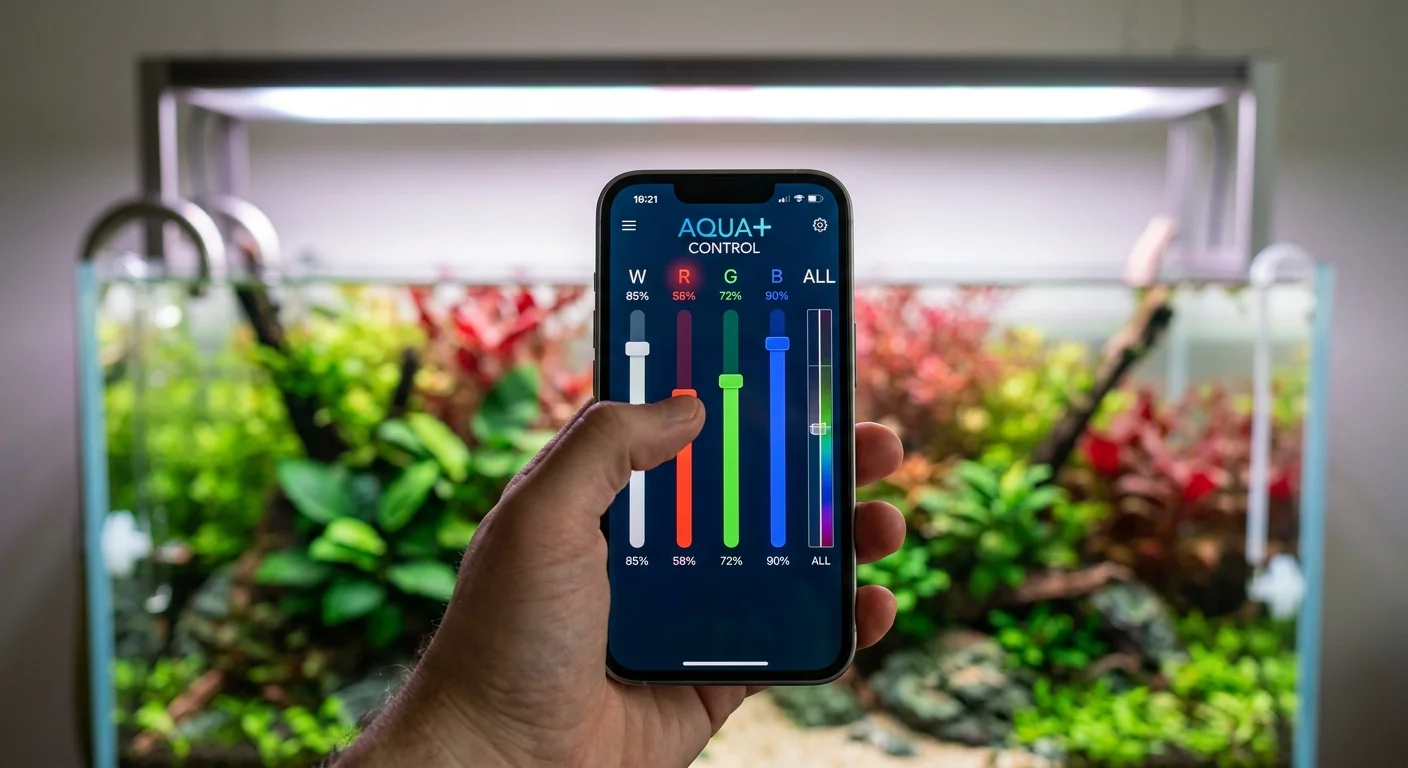
Deploying a full spectrum aquarium light equipped with fully addressable RGB or WRGB diodes necessitates precise mathematical calibration to achieve target horticultural outcomes. Modern programmable fixtures are not designed to operate at a uniform 100% intensity across all output channels. Instead, the precise susunan warna lampu led aquascape (color arrangement) must be engineered to flawlessly balance the conflicting demands of maximum quantum yield, induced photobiological stress (for anthocyanin pigmentation), and absolute visual clarity.
The empirical consensus for the best light spectrum for aquarium plants dictates a highly asymmetric energy distribution. Standardized horticultural engineering utilizes the following channel output parameters to establish a baseline for high-demand, CO2-injected systems:
Continuous, linear photoperiods represent a biological fallacy. Aquatic flora operate strictly on a Daily Light Integral (DLI)—the absolute cumulative volume of photosynthetically active photons striking a one-square-meter area over a complete 24-hour cycle. Once a plant's maximum DLI is reached, the reaction centers of Photosystem II (specifically the D1 protein core) become saturated and begin to structurally degrade, triggering rapid photoinhibition. Excess light beyond this exact threshold provides zero horticultural benefit and is strictly scavenged by opportunistic algae.
To calculate and regulate this critical exposure, engineers utilize the following formula:
$$ DLI = PPFD \times \text{Photoperiod (hours)} \times 0.0036 $$
(Where DLI is expressed in $mol \cdot m^{-2} \cdot d^{-1}$ and PPFD in $\mu mol \cdot m^{-2} \cdot s^{-1}$)
Precision spectral tuning requires robust microcontroller hardware and highly responsive UI software. Below is an engineering comparison of the primary programmable LED ecosystems utilized by high-end aquatic system installers:
| Controller Ecosystem | Native Hardware Example | Channel Resolution | DLI Tracking & Circadian Ramping | Field Reliability & Est. Lifespan | Approx. Cost (Hardware) |
|---|---|---|---|---|---|
| My Chihiros App | Chihiros WRGB II Pro | 1% increments (R,G,B,W) | Manual calculation required; exceptional granular dawn/dusk ramping. | High (5+ years). Native Bluetooth handshakes can occasionally desynchronize. | $250 - $450 |
| Mobius (EcoTech) | Radion XR15 Freshwater | 1% increments, 6+ independent color channels | Native PAR/DLI software estimations. Advanced lunar cycles. | Extremely High (7+ years). Industrial-grade internal PCB components. | $400 - $500 |
| FluvalSmart | Fluval Plant 3.0 | 1% increments (5 broad spectral bands) | Basic timer and ramping logic; lacks complex DLI analytics. | Moderate (3-5 years). Highly susceptible to thermal degradation if heat sinks are obstructed. | $150 - $250 |
Installer Feedback & Field Experience:
By meticulously programming the target spectrum to prioritize deep reds and controlled blues, and mathematically capping the photoperiod to match the target DLI, the engineer establishes a high-energy, physiologically perfected environment. This exact methodology forces intense structural and pigmentary responses from the flora while simultaneously neutralizing the lighting system as a potential vector for algal pathogenesis.
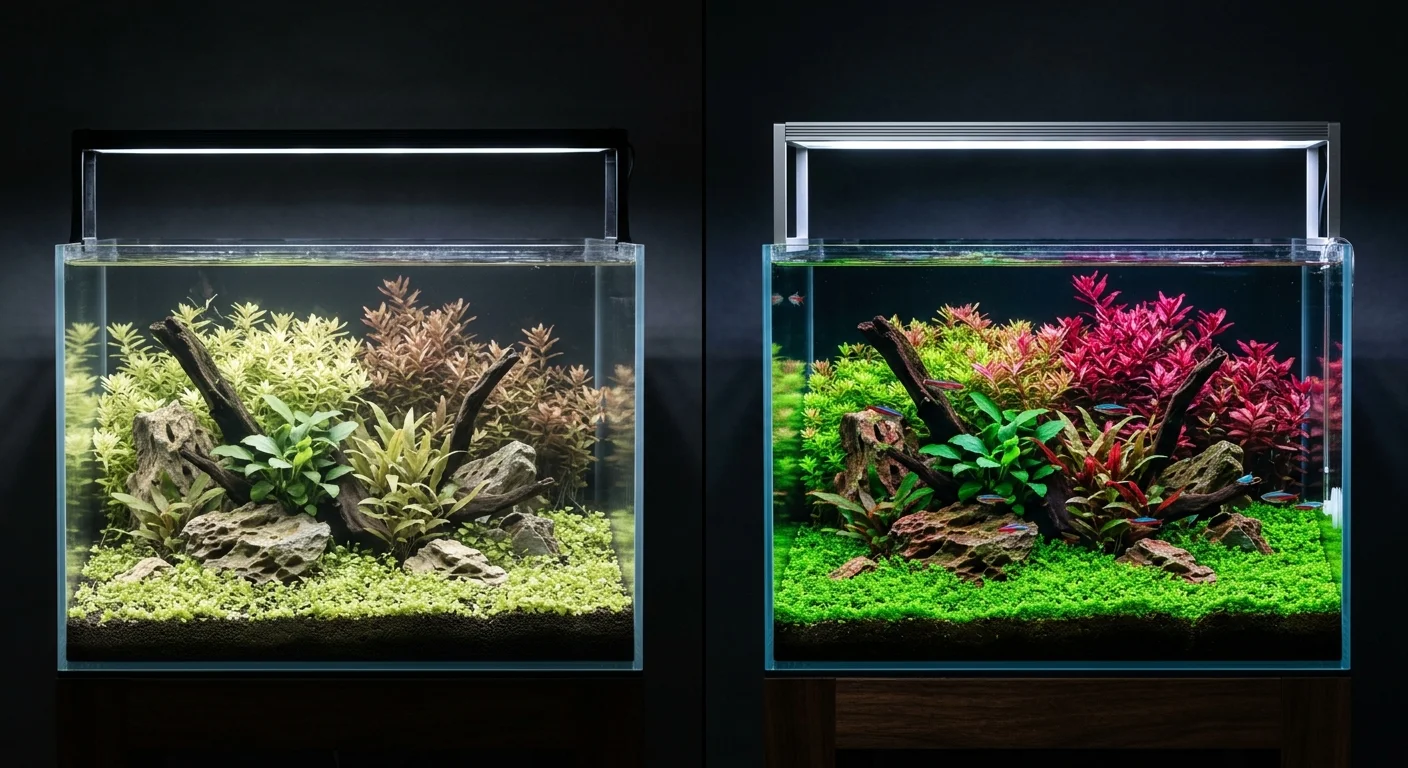
Bridging the gap between theoretical photobiology and the practical deployment of high-intensity horticultural lighting reveals significant operational complexities. While the mathematical synthesis of a perfect WRGB spectrum is proven to maximize Photosynthetically Usable Radiation (PUR), professional aquascapers and system integrators frequently encounter distinct friction points in the field. These encompass metabolic imbalances, hardware longevity, and user interface reliability over typical 3 to 5-year lifecycles.
The most pervasive point of failure for advanced aquarists upgrading to flagship LED arrays is the fundamental misunderstanding of biological thermodynamics. Driving a high-PUR spectrum at intensities exceeding 100 $\mu mol \cdot m^{-2} \cdot s^{-1}$ exponentially accelerates the photosynthetic electron transport chain. According to the foundational stoichiometric equation of photosynthesis, $6CO_2 + 6H_2O + h\nu \rightarrow C_6H_{12}O_6 + 6O_2$, carbon dioxide acts as the critical limiting reagent.
Field experience dictates that when lighting intensity is upgraded without a perfectly synchronized, linear increase in bioavailable CO2, the enzyme RuBisCO begins oxygenating rather than carboxylating, triggering extreme photorespiration. This metabolic stalling leaves excess radiant energy to be hijacked by opportunistic algae. Professional installations mandate a strictly maintained 30 to 45 ppm CO2 concentration (often verified via a 1.0 to 1.2 pH drop from degassed baseline) when running these fixtures above 60% capacity. Mastering this balance is non-negotiable; lighting is only the throttle, but CO2 is the fuel.
Modern programmable arrays, particularly the Chihiros WRGB II Pro and Week Aqua PRO, isolate discrete R, G, and B channels to allow exact spectral engineering. However, novice users frequently push the 660nm Red and 450nm Blue channels to 100% to force anthocyanin expression, neglecting the Green and White channels.
Installer feedback consistently highlights that this results in a harsh, artificial "magenta" or "blurple" aesthetic that degrades the natural visual rendering of the aquascape. A standard best practice in professional integration is the implementation of the "50/30/20 Rule" for perceived output: allocate the majority of visual intensity to Green/White channels to neutralize the magenta hue and satisfy the human eye’s peak sensitivity (555nm), while allowing the sheer baseline wattage of the R and B channels to satisfy the plant's Relative Quantum Efficiency (RQE) needs.
High-output LEDs are subject to rigorous thermal realities. In accordance with IEC 62717 standards regarding LED module performance, lumen maintenance ($L_{70}$ or $L_{90}$) is directly tied to the thermal junction temperature ($T_j$) of the diode. Aquariums are inherently humid environments, frequently challenging the IP67 ratings of these fixtures.
The following table evaluates flagship fixtures based on professional field deployment data, focusing on long-term reliability and operational friction.
| Fixture Model | Lifespan & Thermal Performance (3-5 Yrs) | Controller Interface & Friction Points | IP Rating & Build Standard | Operational Feedback & Value Index |
|---|---|---|---|---|
| ADA Solar RGB | Exceptional $L_{90}$ maintenance. Heavy, oversized radial passive heatsinks keep $T_j$ exceptionally low. | Zero friction. Fixed spectrum. No app, no Bluetooth. Requires external analog/smart plug timer. | IPX4 / Robust | Highest reliability. bulletproof over 5+ years. Extremely high cost; zero tunability is a dealbreaker for modern tinkerers. |
| Chihiros WRGB II Pro | Moderate thermal degradation. Slim profile limits heat dissipation; running at 100% reduces lifespan faster. | High friction. "My Chihiros" app is infamous for dropped connections and firmware update failures. | IP43 | Unmatched raw power for the price. Requires rigorous tuning to avoid magenta wash. Must run below 80% for longevity. |
| Twinstar S-Line | Excellent thermal management. Well-balanced diode distribution prevents localized hot spots. | Low friction. Fixed internal spectrum. Often paired with simple inline dimmers. No app dependency. | IP67 (sealed) | The "plug-and-play" standard. Perfectly tuned visual spectrum out of the box, but lacks the extreme red punch of Chihiros. |
| Week Aqua PRO | Variable. The inclusion of UV diodes causes slightly faster phosphor degradation on adjacent white chips. | Moderate friction. App interface is poorly translated and clunky, though timer memory is surprisingly stable. | IP67 | Best scientific spectrum (UV inclusion). Incredible anthocyanin yields. Build quality is slightly less refined than ADA. |
Pro-Tip: Installer Feedback on System Integration
The deployment of high-tier, application-specific LED arrays demands a substantial initial capital expenditure (CAPEX). However, evaluating this investment strictly through the lens of upfront cost represents a fundamental engineering miscalculation. Professional aquatic horticulturists, commercial aquascapers, and boutique propagation facilities must evaluate these fixtures utilizing a Total Cost of Ownership (TCO) model, juxtaposed against the tangible Return on Investment (ROI) generated through aggressive biological yield and absolute operational stability.
Historically, high-energy planted systems relied heavily on High-Output T5 (HO-T5) fluorescent arrays. While T5s provide excellent canopy penetration, the phosphors coating the interior of the tubes undergo rapid photolytic degradation. Field empirical data demonstrates a 15% to 20% drop in Photosynthetically Active Radiation (PAR) and a catastrophic spectral shift within 6 to 9 months of operation at 8-hour daily photoperiods. This necessitates continuous, mandatory bulb replacements to prevent opportunistic algal blooms triggered by the degraded spectral output.
Modern high-end LED topologies (e.g., ADA Solar RGB, Chihiros WRGB II Pro) eliminate this recurring operational expenditure (OPEX). Engineered with robust aluminum extrusion heatsinks and, in some cases, active micro-fan cooling, these fixtures maintain optimal diode junction temperatures. This thermal management ensures an L70 lifespan rating (the operational time before luminous flux depreciates to 70% of its initial value) exceeding 50,000 hours.
The financial evaluation over a defined temporal period $t$ (in years) is modeled as:
$$ TCO = C_{capex} + \sum_{n=1}^{t} \left( \frac{P \cdot h \cdot 365 \cdot E_{rate}}{1000} \right) + R_{maint} $$
Where $C_{capex}$ is the initial cost, $P$ is power consumption (Watts), $h$ is daily photoperiod (hours), $E_{rate}$ is the utility cost ($/kWh), and $R_{maint}$ encompasses the cost of consumable replacements.
The following table models the 5-year TCO and operational metrics for a standard 90cm (approx. 50-gallon) high-demand planted ecosystem, assuming an energy rate of $0.15/kWh and an 8-hour daily photoperiod.
| Legacy HO-T5 (4x39W) | ATI SunPower | $350 | $341 | $480 (10 bulb swaps) | **$1,171** | Very Low (rapid drift) | Moderate |
| Budget White-LED | Finnex Planted+ | $160 | $153 | $0 | **$313** | Moderate | Low (Green dominant) |
| High-End WRGB | Chihiros WRGB II | $330 | $306 | $0 | **$636** | Exceptional | Maximum |
| Premium RGB+UV | Week Aqua PRO | $400 | $262 | $0 | **$662** | Exceptional | Maximum |
The true financial leverage of premium lighting lies in the acceleration of biomass accumulation and the artificial induction of high-value phenotypic traits. In the commercial propagation of rare aquatic flora, margin is dictated by specimen quality.
A standard Bucephalandra variety or a rare Rotala macrandra 'Variegated' grown under an optimized Week Aqua or Twinstar S-Line array will be subjected to calculated UV and high-intensity deep red (660nm) stress. This forces hyper-saturation of anthocyanin pigments. In the secondary aquascaping market, heavily pigmented, compact (short internodal) cuttings routinely command a 300% to 500% price premium over sub-optimally grown, "leggy," or green-shifted specimens.
Furthermore, high-PUR spectrums drastically reduce the mortality rate ($M_{loss}$) of expensive, delicate in-vitro (tissue culture) plants during the critical submerged transition phase. By providing the exact Photosynthetic Action Spectrum (PAS) required for immediate carbon fixation, the plants adapt rapidly, virtually eliminating costly "melt" phases.
Installer Feedback & Field Experience:
In summation, acquiring top-tier RGB/WRGB illumination infrastructure is a highly defensible economic decision. The elevated CAPEX is rapidly amortized by the total elimination of bulb replacements, the drastic reduction in commercial maintenance labor, and the exponentially increased resale value of the horticulturally superior biomass it yields.
Q: Can high-output terrestrial horticultural LEDs be deployed over closed aquatic ecosystems?
While theoretically capable of driving photosynthesis, deploying terrestrial grow lights (e.g., standard quantum boards from Spider Farmer or HLG) over aquatic environments introduces severe engineering and aesthetic compromises. Terrestrial fixtures are engineered to maximize Photosynthetic Photon Flux (PPF) using high-efficacy diodes (such as the Samsung LM301H), which prioritize red and blue wavelengths while frequently neglecting the green spectrum (500–600 nm). In an aquatic environment, this results in catastrophic visual rendering (a flat, yellowish or "blurple" hue) and poor deep-canopy penetration through the water column.
Furthermore, terrestrial fixtures rarely meet the stringent environmental protection standards required for aquatic proximity. According to IEC 60529, electrical enclosures operating directly above agitated water must possess a minimum ingress protection rating of IP67. Standard terrestrial fixtures (typically IP20 to IP65) suffer rapid diode degradation, conformal coating delamination, and critical driver failure due to continuous exposure to micro-condensation and evaporated mineral salts.
| Specification / Parameter | Terrestrial Quantum Board (e.g., HLG 100) | Advanced Aquatic WRGB (e.g., Chihiros WRGB II) | Field / Installer Feedback |
|---|---|---|---|
| Spectral Priority | Raw PPFD / Biomass accumulation | High PUR / High CRI / Visual clarity | Terrestrial lights yield muddy water aesthetics; WRGB creates extreme visual depth. |
| Green Channel Peak | Low (Absorbed by broad white phosphors) | Extremely High (Discrete 520nm diodes) | Aquatic plants require strong green transmission to prevent lower-leaf senescence. |
| Ingress Protection | IP20 to IP65 (Splash resistant at best) | IP67 (Immersion resistant) | Terrestrial boards suffer oxidized solder joints within 6–12 months over open-top tanks. |
| Beam Angle / Optics | 120° (Broad, overlapping coverage) | 90°–110° with secondary TIR optics | Aquatic lights push directional photons deeper; terrestrial optics lose massive energy to "light spill" on tank glass. |
Q: How does the water column mathematically alter Photosynthetically Active Radiation (PAR) at the substrate?
Water acts as a highly refractive and absorptive medium, fundamentally altering the trajectory and energy of photons. The attenuation of PAR as a function of depth is calculated using the Beer-Lambert Law, expressed mathematically as:
$$ I_z = I_0 e^{-K_d z} $$
Where:
In a highly purified, synthetic planted aquarium, the baseline $K_d$ is relatively low. However, field engineers consistently note that the theoretical calculation rarely matches submerged sensor data without accounting for dissolved organic matter (DOM) and surface agitation.
Field Experience / Expert Tip:
When conducting on-site light mapping with a submerged quantum sensor like the Apogee SQ-520, installers frequently observe a 30% to 50% PAR reduction within just 0.4 meters of depth. This is heavily compounded by surface rippling from lily pipes, which creates focal lensing that dynamically scatters light. Always over-engineer the fixture's output capacity by 30% to account for optical degradation over the lifetime of the ecosystem.
Q: What is the precise photobiological mechanism of a "Blackout Period" for Cyanobacteria, and what are the systemic risks?
Cyanobacteria (commonly referred to as Blue-Green Algae or BGA) are highly opportunistic, photosynthetic prokaryotes that rely heavily on the accessory pigment phycocyanin. Unlike higher vascular plants, which store dense carbohydrate reserves in their rhizomes and extensive stem networks, cyanobacteria exist on a tight metabolic margin.
Implementing a strict 3-to-5-day total blackout period physically collapses their electron transport chain. Deprived of the 600–650 nm wavelengths necessary to excite phycocyanin, the cyanobacteria deplete their minimal cellular energy reserves within 48 to 72 hours, resulting in rapid cellular lysis and colony death.
However, executing a total blackout presents profound risks to the broader ecosystem. While higher plants (e.g., Echinodorus or Cryptocoryne species) can survive the dark period using stored starches, the sudden mass-die-off of cyanobacteria releases massive volumes of dissolved organics and toxic microcystins into the water column.
Standard Operating Procedure for Blackouts:
1. Preparation: Conduct a 50% water change and manually siphon visible BGA mats.
2. Deprivation: Wrap the aquarium entirely in an opaque material (e.g., heavy contractor bags). Disable all ambient room light and CO2 injection systems.
3. Oxygenation: Increase surface agitation or inject ambient air via an airstone. The sudden cessation of photosynthesis shifts the entire tank to a consumptive respiratory state, risking fatal hypoxic conditions for fauna if gas exchange is not artificially boosted.
4. Reintroduction: Post-blackout, do not return the LED fixture to 100% intensity immediately. Ramp the light up over 7 days starting at 40% intensity to prevent catastrophic photoinhibition in the vascular plants, whose chloroplasts will be temporarily hyper-sensitized.
