
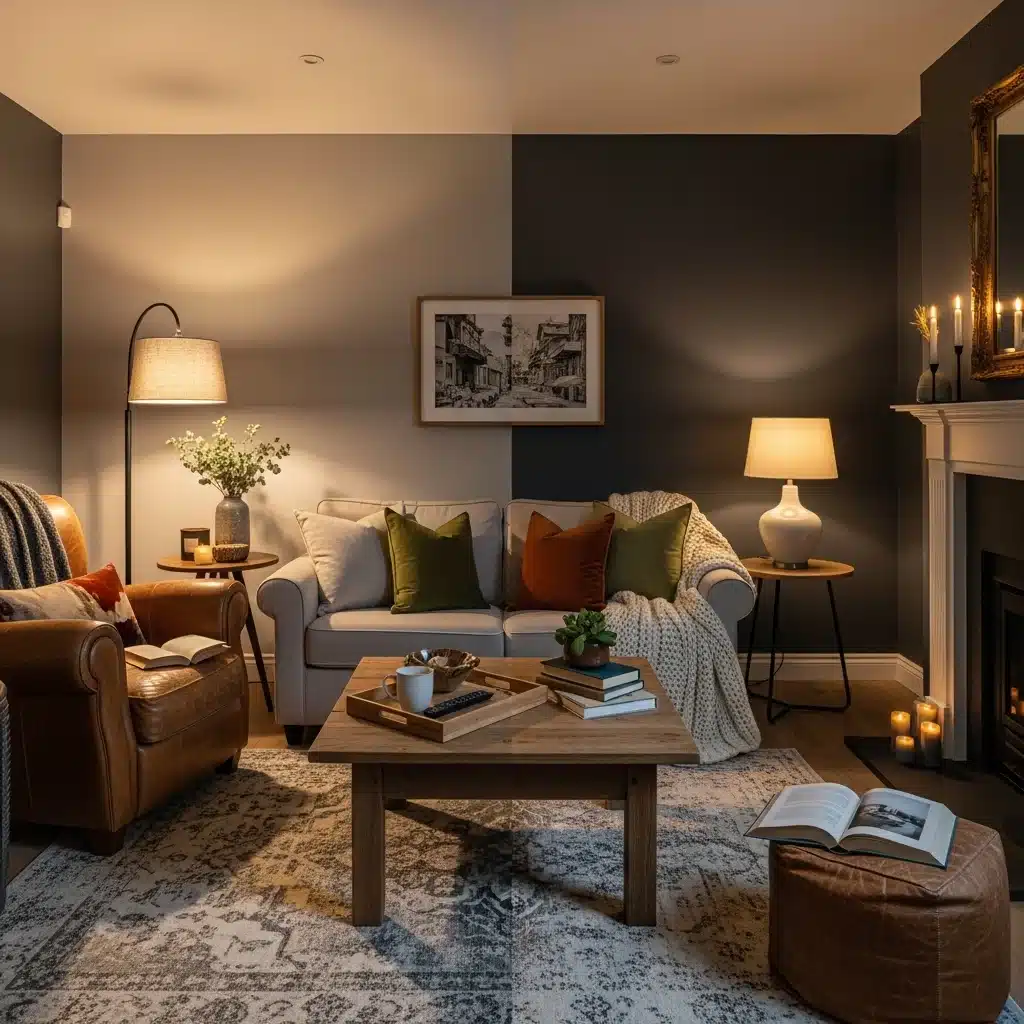
We have all experienced the distinct visual dissonance of installing a new lamp, flipping the switch, and being immediately unsettled by the result. Instead of a warm, inviting glow, the room is washed in a sterile, clinical pallor reminiscent of a hospital operating theatre. Conversely, you might install a bulb expecting clarity for a workspace, only to find the illumination unhelpfully dim and amber, straining your eyes as you attempt to focus on detailed tasks. This common frustration is rarely a function of insufficient power or faulty wiring; rather, it is a fundamental misunderstanding of Correlated Color Temperature (CCT).
The modern consumer marketplace offers a vast array of illumination options, but the core confusion often centers on the chromatic distinction of soft white vs daylight configurations. Unlike traditional incandescent filaments, which acted as black-body radiators emitting light as a direct function of heat—roughly following Planck’s law where peak wavelength is inversely proportional to temperature ($\lambda_{\text{max}} = \frac{b}{T}$)—modern Solid-State Lighting (SSL) utilizes Light Emitting Diodes (LEDs).
In LED technology, the output color is not determined by heat, but by the bandgap of the semiconductor and the specific composition of the phosphor coating used to convert blue electroluminescence into a broader white spectrum. This engineering flexibility has flooded the market with various types of light bulbs, effectively decoupling brightness (measured in lumens) from color appearance (measured in Kelvin). Consequently, purchasing a light bulb is no longer a simple utility transaction; it is a design decision that requires an understanding of optical physics and human physiology.
The selection of a specific CCT does more than dictate the aesthetic "warmth" or "coolness" of a room; it directly influences the occupants' biological and psychological states. This interaction is governed by the sensitivity of intrinsically photosensitive retinal ganglion cells (ipRGCs) in the human eye. These cells are particularly responsive to short-wavelength (blue) light, which is abundant in "Daylight" bulbs. Exposure to high-Kelvin lighting suppresses the secretion of melatonin, the hormone responsible for regulating the sleep-wake cycle, thereby promoting alertness and visual acuity. In contrast, "Soft White" bulbs, with their longer wavelengths (red/orange spectrum), minimize this suppression, facilitating circadian entrainment toward relaxation and sleep.
Therefore, lighting must be treated as a technical specification of the home environment. It is not merely about visibility; it is about matching the spectral power distribution of the light source to the functional requirements of the space. Whether you are engineering a high-contrast environment for precision tasks or a low-Kelvin atmosphere for relaxation, understanding the technical nuances between soft white and daylight is the first step toward optimizing your lighting plan.

To truly master lighting design, one must look past marketing labels and understand the underlying physics of Correlated Color Temperature (CCT). Color temperature is measured in Kelvin ($K$), a thermodynamic temperature scale used in science and engineering. While the concept originates from heating a theoretical "black-body radiator" (like a block of tungsten) until it glows, in the context of modern consumer lighting, it serves as a precise metric for the hue of the "white" light emitted by a source.
The physics follows a specific progression: as the physical temperature ($T$) of a black body increases, the peak wavelength ($\lambda_{max}$) of the emitted radiation shifts toward the blue end of the spectrum. This is modeled by Wien's Displacement Law:
$$ \lambda_{max} = \frac{b}{T} $$
Where $b$ is Wien's displacement constant. This creates an inverse relationship in lighting terminology that often confuses consumers: lower Kelvin numbers represent "warm" colors (reds, oranges, yellows), while higher Kelvin numbers represent "cool" colors (blues, cyans).
When selecting illumination, you are essentially choosing a specific point on this thermal spectrum.
This range represents the standard for residential warmth. When homeowners ask what is soft white light, they are inquiring about a spectral power distribution that is heavily weighted toward the red and yellow wavelengths (approximately $600nm - 700nm$). This mimics the thermal radiation of a traditional tungsten filament bulb, which burns at roughly $2700K$.
If you are trying to determine what k is soft white, the industry standard is strictly defined between $2700K$ and $3000K$. At this temperature, the light minimizes blue light emission, which creates a cozy, atmospheric glow that softens skin tones and architectural imperfections.
Moving up the scale, we enter the neutral zone. At approximately $3500K$ to $4100K$, the light source achieves a chromaticity that is balanced. It retains some warmth but introduces enough blue flux to render whites more accurately. This temperature is often referred to as "neutral white" in technical specifications and is the transition point where the light loses its yellow cast without turning sterile.
The term "Daylight" refers to the color of natural light at solar noon. The typical daylight bulb temperature falls between $5000K$ and $6500K$. In this range, the light source emits a high volume of short-wavelength energy (blue light).
Technically, a bulb rated at $6500K$ (often labeled "Crystal White" or "Full Spectrum") attempts to replicate the D65 standard illuminant defined by the International Commission on Illumination (CIE). This light provides high contrast and visual acuity because the abundance of blue light activates the intrinsically photosensitive retinal ganglion cells (ipRGCs) in the human eye, suppressing melatonin and promoting alertness.
To visualize the spectrum as a mathematical inequality relative to "warmth":
$$ T_{SoftWhite} < T_{BrightWhite} < T_{Daylight} $$
$$ 2700K < 4100K < 6500K $$
Understanding these values ensures that your lighting choices are based on photometric data rather than subjective packaging descriptions.
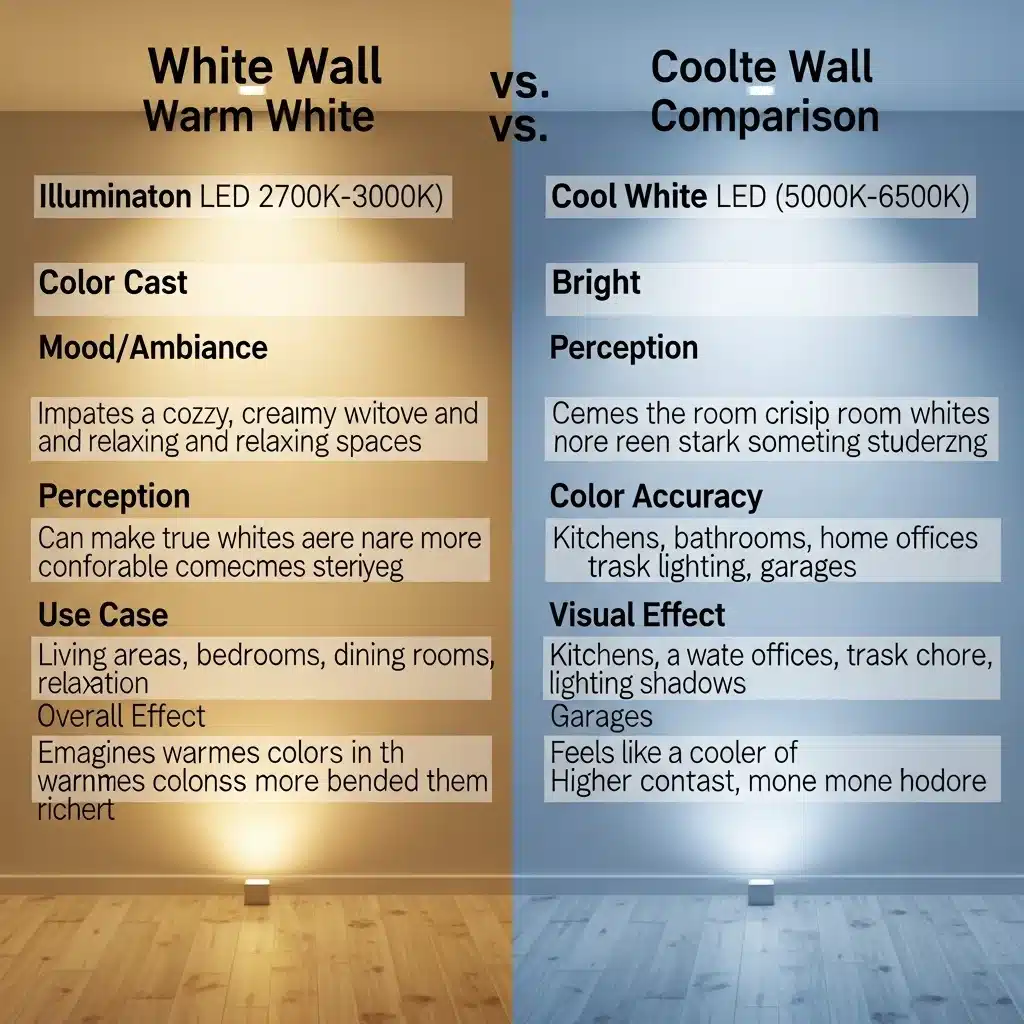
To understand the practical application of lighting, one must distinguish between the physical output of a light source and the physiological response of the human eye. The debate of daylight led vs soft white led is not merely aesthetic; it is rooted in spectral power distribution (SPD) and the physics of how different wavelengths interact with surfaces.
When analyzing what do daylight bulbs look like, we are observing a specific section of the electromagnetic spectrum. A "Daylight" bulb (5000K–6500K) emits a spectrum heavy in short-wavelength blue light. This mimics the diffuse radiation of the sun at high noon, resulting in a stark, blue-white hue. This high-energy light provides sharp contrast, creating a "clinical" or highly defined visual environment.
Conversely, regarding the question is daylight bulb white or yellow, a Soft White bulb (2700K–3000K) is designed to replicate the spectral curve of a black-body radiator, specifically a tungsten filament heated to approximately 2,700 Kelvin. This results in a peak intensity in the red and orange wavelengths, producing a warm, yellowish glow that softens edges and reduces visual acuity in favor of ambient diffusion.
A common technical misconception among consumers is the correlation between color temperature and luminous flux. When asking is daylight or soft white brighter, the engineering answer is that brightness is determined by Lumens ($\Phi_v$), not Kelvin ($K$).
Luminous flux is the measure of the perceived power of light, adjusted to reflect the varying sensitivity of the human eye to different wavelengths. Mathematically, it is defined as:
$$ \Phi_v = 683 \int_{380}^{780} \Phi_e(\lambda) V(\lambda) \, d\lambda $$
Where:
Therefore, an 800-lumen Soft White LED and an 800-lumen Daylight LED emit the same total amount of perceptible light according to standard photometry.
Despite equal lumen ratings, Daylight bulbs often appear brighter to the human eye. This phenomenon is due to the scotopic vs. photopic sensitivity of the retina. The human eye has a peak sensitivity around 555 nm (green-yellow) in photopic (daylight) conditions. However, Daylight LEDs contain higher concentrations of blue light.
Blue-rich light triggers a stronger response in the intrinsically photosensitive retinal ganglion cells (ipRGCs), which control the pupillary light reflex. Furthermore, light with a higher color temperature creates higher contrast ratios, making details stand out more aggressively against shadows. This increased visual acuity tricks the brain into perceiving the light source as "brighter" or more intense than a warmer bulb of equal lumen output.
Summary of Technical Distinction:
While the dichotomy between Soft White and Daylight dominates most consumer lighting decisions, a third, often misunderstood category exists: Bright White (sometimes labeled as "Cool White"). Falling within the Correlated Color Temperature (CCT) range of $3500K$ to $4100K$, this specific spectral band acts as an engineering bridge between the relaxing warmth of incandescent simulation and the high-energy focus of daylight simulation.
To understand the difference between bright white and daylight, one must analyze the spectral power distribution (SPD) of the light source. A Daylight bulb ($5000K - 6500K$) emits a spectrum rich in short-wavelength blue photons ($\approx 460nm$). This mimics the Rayleigh scattering effect seen in the midday sky, creating high contrast but often inducing a sterile, clinical atmosphere commonly associated with hospitals or industrial warehouses. Conversely, Bright White reduces the amplitude of these blue peaks while simultaneously neutralizing the yellow-orange dominance found in Soft White ($2700K$).
From a chromaticity perspective, looking at the CIE 1931 color space, Bright White sits closer to the Planckian locus—the curve describing the color of an ideal black-body radiator as it heats up—without deviating into the "blue" zone. This makes Bright White theoretically neutral. It appears whiter to the eye than Soft White because it removes the amber cast, yet it lacks the harsh glare associated with the higher Kelvin ratings of Daylight bulbs.
A critical technical distinction arises when analyzing natural light vs daylight bulbs. Marketing teams often conflate "Daylight" (a measure of color temperature, $K$) with "Natural Light" (often implying high color fidelity). However, these are governed by two different metrics:
Mathematically, the general Color Rendering Index ($R_a$) is derived from the average color shift of eight standard pastel samples ($R_1$ through $R_8$). The calculation is roughly:
$$ R_a = \frac{1}{8} \sum_{i=1}^{8} (100 - 4.6 \Delta E_i) $$
Where $\Delta E_i$ represents the Euclidean distance in color space between the test source and the reference illuminant.
Here lies the engineering trap: A generic "Daylight" LED bulb set to $5000K$ can have a low CRI (e.g., $R_a < 80$). This results in a light that looks like the sun but makes skin tones appear gray or washed out. True "Natural Light" simulation requires not just a high Kelvin rating, but a High CRI (typically $90+$) and specifically a high $R_9$ value (saturated red), which standard Daylight bulbs frequently lack.
Bright White ($3500K - 4100K$) is frequently the superior specification for residential task areas over Daylight bulbs. In environments like kitchens or bathrooms with white cabinetry or marble countertops, Soft White can make surfaces appear dingy or yellow. However, Daylight bulbs can introduce excessive specular reflection (glare) off polished surfaces due to the high energy of blue light.
Bright White provides the necessary chromatic neutrality to keep white surfaces looking crisp without the visual fatigue caused by the excessive blue spectrum of $5000K+$ bulbs. It is the optimal photometric choice for users seeking clarity without sterility.

Optimizing residential lighting requires a systematic approach that balances photometric performance with human physiology. The decision between Soft White and Daylight isn't merely aesthetic; it dictates the functionality of the space and influences your circadian rhythm.
In areas designated for decompression, minimizing blue spectral energy is critical. Blue light suppresses the secretion of melatonin, the hormone responsible for regulating the sleep-wake cycle. Therefore, when evaluating soft white or daylight for living room fixtures, the technical recommendation is strictly Soft White.
For these spaces, you should aim for a Color Correlated Temperature (CCT) range of $2700\text{K} \leq T \leq 3000\text{K}$. This range mimics the spectral power distribution of incandescent filaments or the low-angle sunlight of dusk, signaling to the brain that it is time to unwind.
Similarly, when selecting soft white or daylight bulbs for bedroom lamps, avoid exceeding $3000\text{K}$. Installing high-Kelvin "Daylight" bulbs in sleeping quarters creates a high-contrast environment that can shift your circadian phase, increasing alertness when your body requires rest.
The kitchen is a workspace where visual acuity and Color Rendering Index (CRI) take precedence over ambiance. The best light bulbs for kitchen environments fall into the Daylight ($5000\text{K}$) or upper Bright White ($4000\text{K}$) range.
Higher Kelvin temperatures naturally provide greater visual contrast, which is essential for safety-critical tasks such as knife work, reading small print on measurements, and inspecting food quality. For optimal food preparation, ensure your bulbs have a high CRI ($\text{CRI} \geq 90$). A high CRI ensures that the reds in meat or the greens in vegetables appear vibrant and accurate rather than dull or grey.
Bathrooms present a unique engineering challenge: the trade-off between clinical accuracy and aesthetic flattery. When debating soft white or daylight for bathroom general lighting (overhead/shower), many engineers recommend a "Bright White" compromise ($3500\text{K}$). This avoids the sterility of a hospital room while providing enough clarity for cleaning.
However, the specific requirements change at the sink. The best light bulbs for bathroom vanity fixtures are arguably Daylight bulbs ($5000\text{K}$). For grooming and cosmetic application, you require lighting that mimics outdoor solar conditions to prevent metamerism—a phenomenon where colors match under one light source but differ under another. If you apply makeup under Soft White lighting ($2700\text{K}$), the warm, orange hue may cause you to over-apply products to compensate for the lack of cool light, leading to unnatural results once you step outside.
Technical Tip: If possible, install two lighting circuits in the bathroom:
1. Task Layer: Daylight bulbs ($5000\text{K}$) at the vanity for precision.
2. Ambient Layer: Soft White ($2700\text{K}$) overheads on a dimmer for relaxing baths.
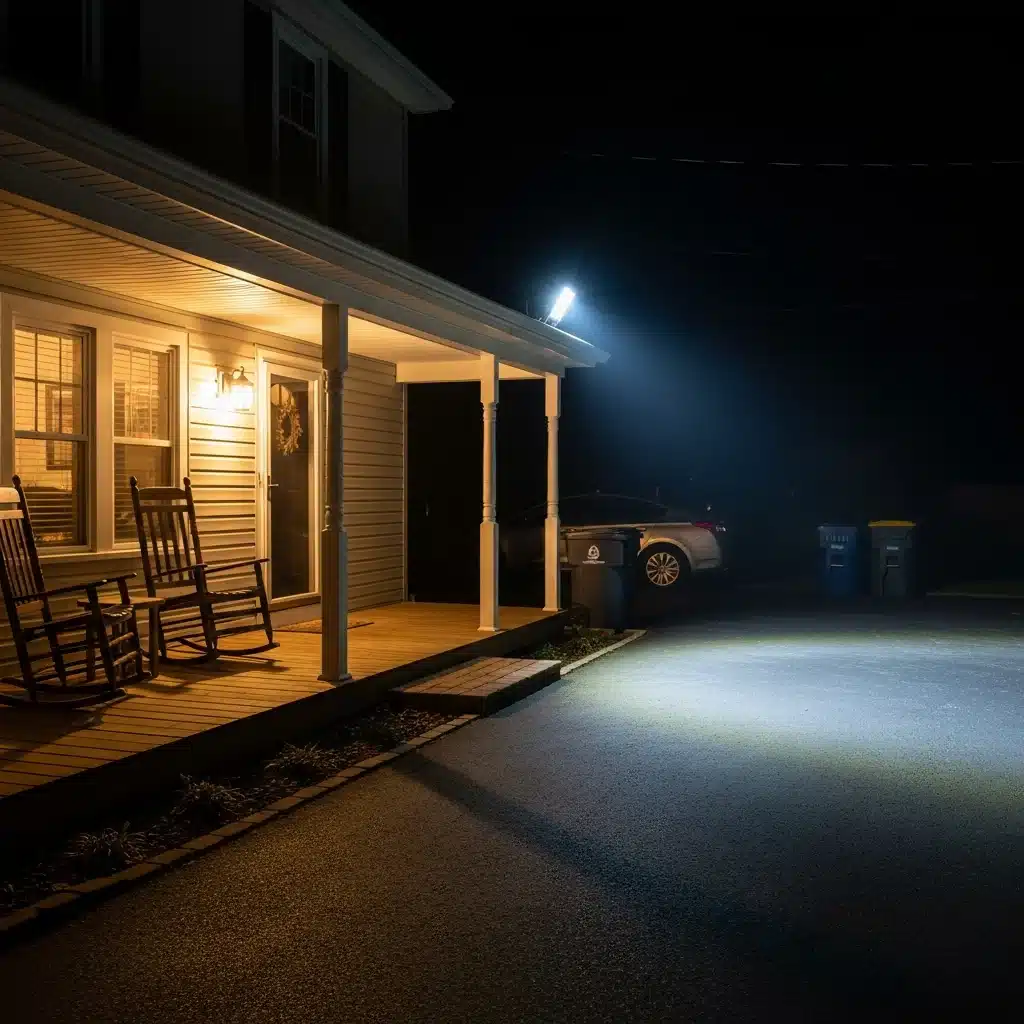
When engineering a lighting plan for exterior and functional spaces, the primary variable shifts from ambiance to visual acuity and scotopic (low-light) efficiency. Unlike living spaces where comfort is king, these areas demand high-contrast illumination to ensure safety, precision, and alertness.
The debate regarding soft white vs daylight for outside lighting requires a bifurcated approach based on the specific fixture's purpose.
For security floodlights and perimeter lighting, Daylight LEDs ($5000\text{K} - 6500\text{K}$) are superior. At night, the human eye shifts from photopic vision (cone-dominated) to scotopic vision (rod-dominated). Rod cells are more sensitive to the blue-rich spectrum found in Daylight bulbs. Consequently, a Daylight bulb will appear effectively brighter and provide sharper edge definition than a Soft White bulb, even if the luminous flux ($\Phi_v$, measured in lumens) is identical. This spectral characteristic makes Daylight bulbs the optimal choice for deterring intruders and illuminating dark driveways.
However, the best outdoor light bulbs for entryways, covered porches, and architectural accents are Soft White ($2700\text{K} - 3000\text{K}$). High-Kelvin Daylight bulbs can create a harsh, sterile "commercial" appearance that is uninviting to guests. Furthermore, lower Kelvin temperatures produce less visible light pollution (skyglow) and are less likely to disrupt local wildlife circadian rhythms.
The garage is rarely just a storage space; it is often a workshop for automotive repair or carpentry. This is a prime example of where to use daylight bulbs.
In a workshop environment, color rendering and contrast are critical. Soft White bulbs cast a yellow hue that can distort the true color of wires, paint, or fluids. Daylight bulbs ($5000\text{K}$) offer a spectral power distribution (SPD) that closely resembles solar radiation at noon. This high-energy light increases the perception of contrast, making it significantly easier to locate dropped screws, read caliper measurements, or identify surface imperfections on a project.
Understanding when to use daylight bulbs indoors relies on the physiology of the human circadian system. Light in the range of $460\text{nm} - 480\text{nm}$ (blue light) suppresses the secretion of melatonin, the hormone responsible for sleep regulation.
For home offices, reading nooks, and craft rooms, Daylight bulbs serve as a productivity tool. By installing $5000\text{K}$ lighting in desk lamps or overhead task fixtures, you stimulate alertness and cognitive focus. This is particularly beneficial for high-detail tasks such as sewing, drafting, or extensive reading, where the high contrast reduces eye strain (asthenopia).
Summary of Functional Application:
Optimizing residential illumination is rarely achieved through a monolithic approach to Correlated Color Temperature (CCT). While the debate often centers on "Soft White vs. Daylight," the most sophisticated lighting designs utilize a layered approach, treating light as a dynamic tool rather than a static utility. By understanding the spectral power distribution of your bulbs, you can engineer an environment that aligns with both your visual acuity requirements and your circadian rhythm.
Professional lighting design relies on the concept of layering: Ambient, Task, and Accent lighting. A single room often requires different Kelvin ratings for different functions. For instance, a living room benefits from "scene setting."
Caution on Chromaticity Mixing: Avoid mixing different CCTs within the same fixture or immediately adjacent recessed cans, as this creates visual dissonance. Instead, separate them by circuit. High-Kelvin sources should be used for high-illuminance tasks, defined by the formula for average illuminance ($E_{avg}$):
$$ E_{avg} = \frac{\Phi_{total} \times CU \times LLF}{A} $$
Where:
Because Daylight bulbs effectively increase perceived brightness due to the scotopic sensitivity of the human eye, they are mathematically more efficient for the task layer ($E_{avg}$) where precision is required.
To finalize your lighting plan, use the following engineering heuristic to categorize your needs based on the physiological and visual demands of the space:
| Primary Function | Desired State | CCT Target | Spectral Characteristic |
|---|---|---|---|
| Relaxation | Rest / Intimacy | 2700K (Soft White) | Red/Orange dominance; low blue light emission. |
| General Use | Neutral / Social | 3000K - 3500K | Balanced spectrum; standard halogen equivalent. |
| High Focus | Task / Production | 4000K - 5000K (Daylight) | High blue spike; maximizes contrast and color discrimination. |
Inefficient lighting plans often result from ad-hoc replacements over time. Execute an audit of your current lighting inventory today:
Do not settle for a sterile, clinical environment or a dimly lit dungeon. By deliberately selecting the temperature for the task at hand, you transition your home from a simple shelter to a precisely engineered living space.
