Nothing ruins the curb appeal of a home faster than a dark yard. You invested in a professional system, perhaps Kichler landscape lighting, and now you are staring into the darkness asking, "Why are my landscape lights not working?"
As an electrical engineer specializing in outdoor systems, I can tell you that low voltage lighting is deceptively simple. It operates on a safe 12-15 volts, governed by NEC Article 411, but the environment it lives in—buried in wet soil, subjected to freezing temperatures, and attacked by gardening tools—is hostile.
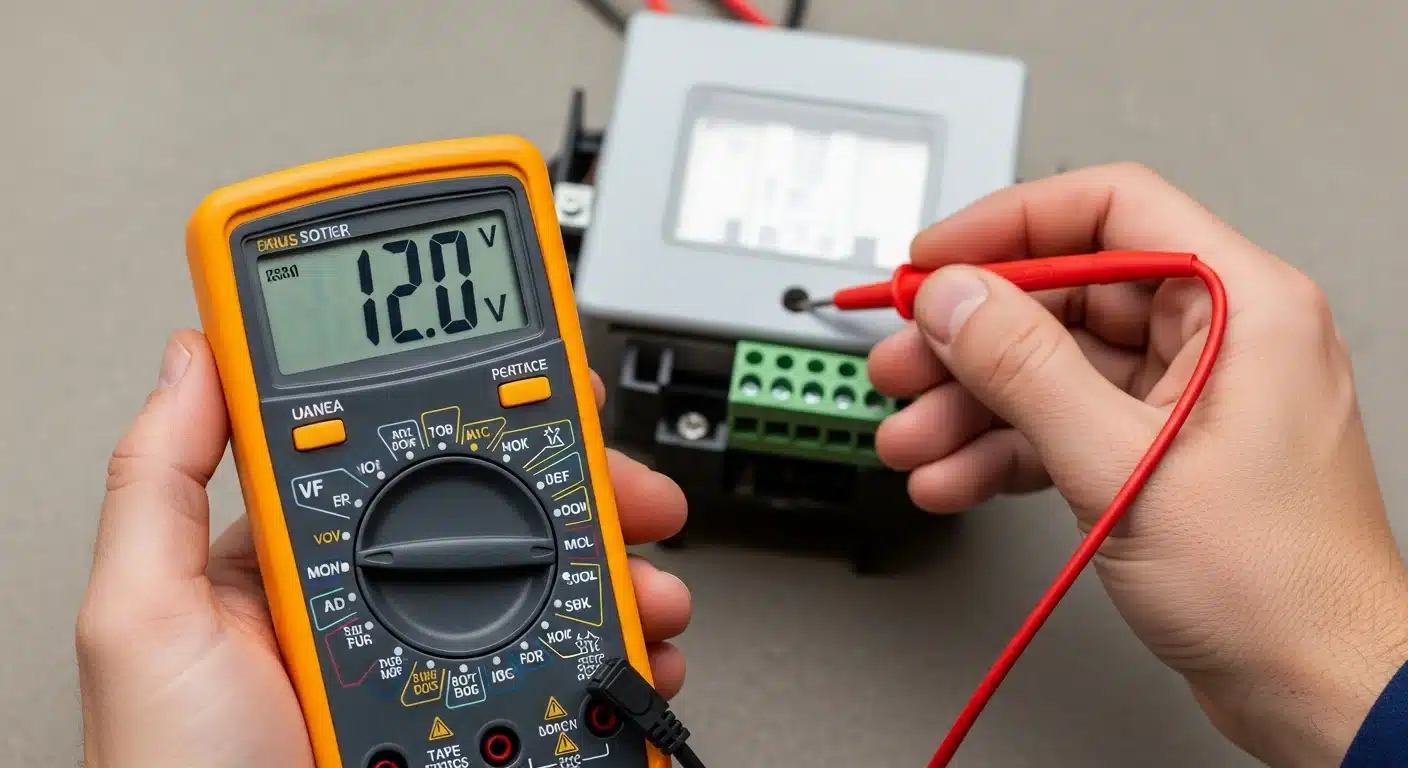
This guide moves beyond basic advice. We will cover professional landscape lighting troubleshooting techniques, including how to use a multimeter to diagnose Kichler transformer troubleshooting issues, locate underground wire breaks, and fix erratic timers.

Before we start cutting wires, we must understand the system flow. A standard low voltage system consists of three main components:
When outdoor lighting is not working, the failure usually isolates to one of these three points. We diagnose them in a specific order: Source (Transformer) $\rightarrow$ Path (Wire) $\rightarrow$ Load (Fixture).
If your entire yard is dark, the issue is almost certainly at the power source. Do not dig up any fixtures yet. We need to verify the power supply chain.
The most common reason for low voltage landscape lights not working isn't the lighting system at all; it is the outlet.
Most transformers are plugged into a GFCI (Ground Fault Circuit Interrupter) outlet. Per NEC code, outdoor outlets must be GFCI protected. If moisture enters any device on that circuit (holiday lights, a power tool, or the transformer itself), the GFCI will trip.
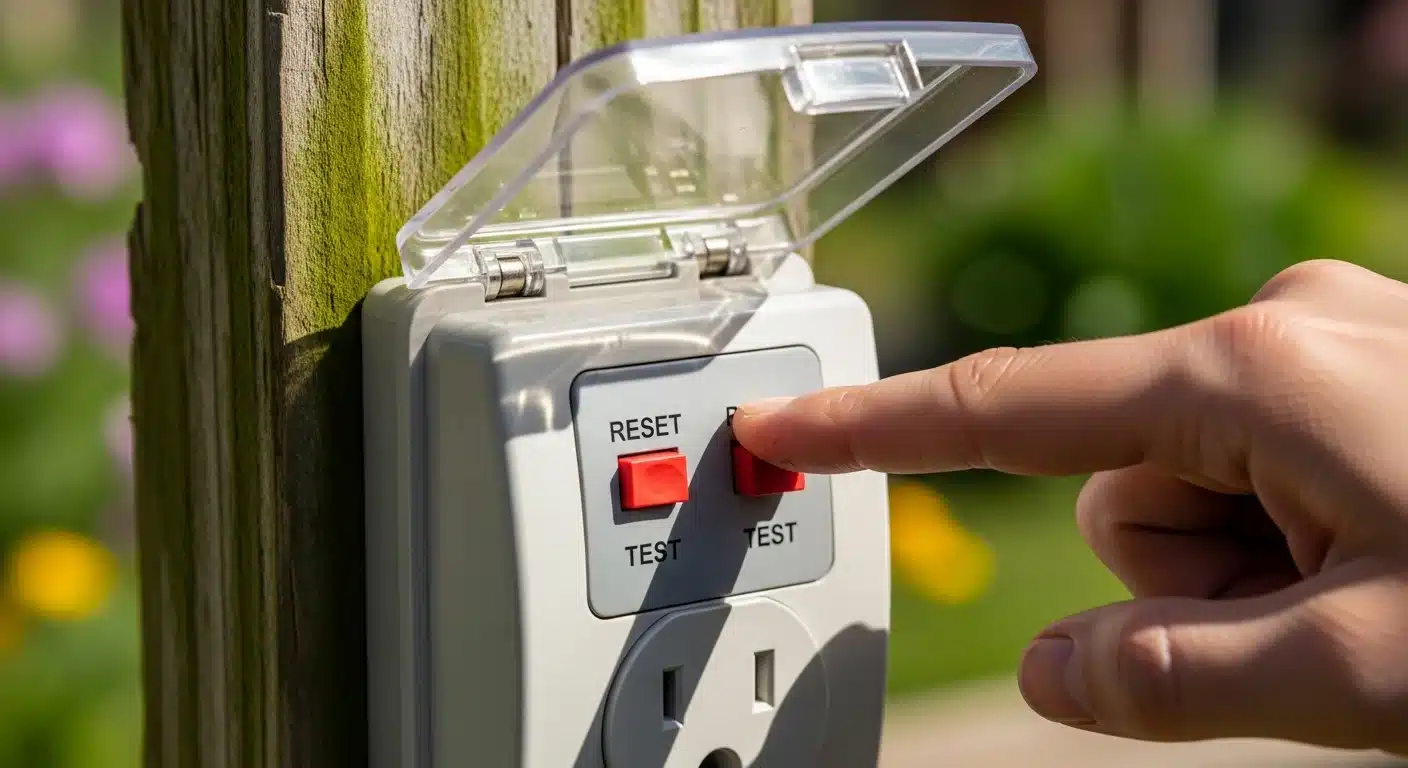
If the outlet has power (plug in a phone charger to test it), the issue is the transformer. High-quality units, especially Kichler low voltage lighting transformers (Professional Series), have built-in safety mechanisms.
Inside the transformer enclosure, look for a toggle switch or a push-button circuit breaker on the low-voltage side.
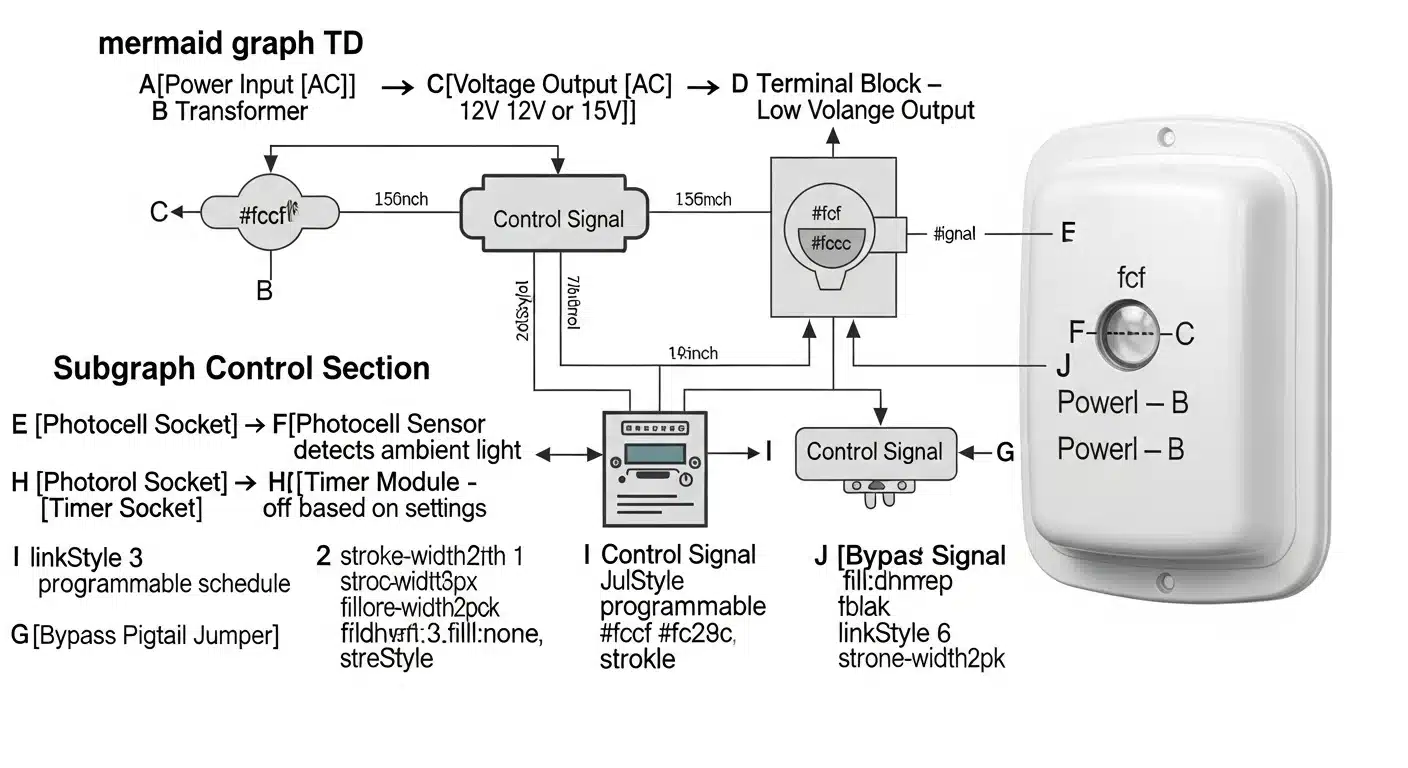
If you are searching for "landscape lighting timer not working," you might be dealing with a faulty control module.
Most systems use a plug-in timer and a photocell (light sensor). If either fails, the circuit opens, and lights stay off.
This is a classic scenario: The path lights near the house work, but the section of landscape lights not working is the group illuminating the trees in the back.
This almost always indicates a severed main line.
According to NEC 300.5, low voltage cables (under 30V) only need to be buried 6 inches deep. While safe, this shallow depth makes them prime targets for edging tools, aerators, and shovels.
If a wire is cut completely, everything "downstream" from the cut will lose power.
How to find the break:
1. Identify the last working light and the first non-working light.
2. The break is in the cable run between these two fixtures.
3. Look for signs of recent digging, new mulch, or edging work.

If your system is wired using a "Hub" method (where multiple wires meet at one central junction), a loose connection here can kill an entire zone. Open the hub (usually a buried junction box or a large grease tube) and tug on the wires. If a wire nut comes off easily, you have found your culprit.
When you have just one landscape light not working, the troubleshooting is localized. Do not disturb the main transformer settings.
Even LEDs fail. Before digging, swap the bulb from the dead fixture with a bulb from a working fixture.
Result: If the known-good bulb doesn't light up in the dead fixture, the issue is the socket or the wiring connection.
In my engineering experience, 90% of single-light failures are due to poor wire connections.
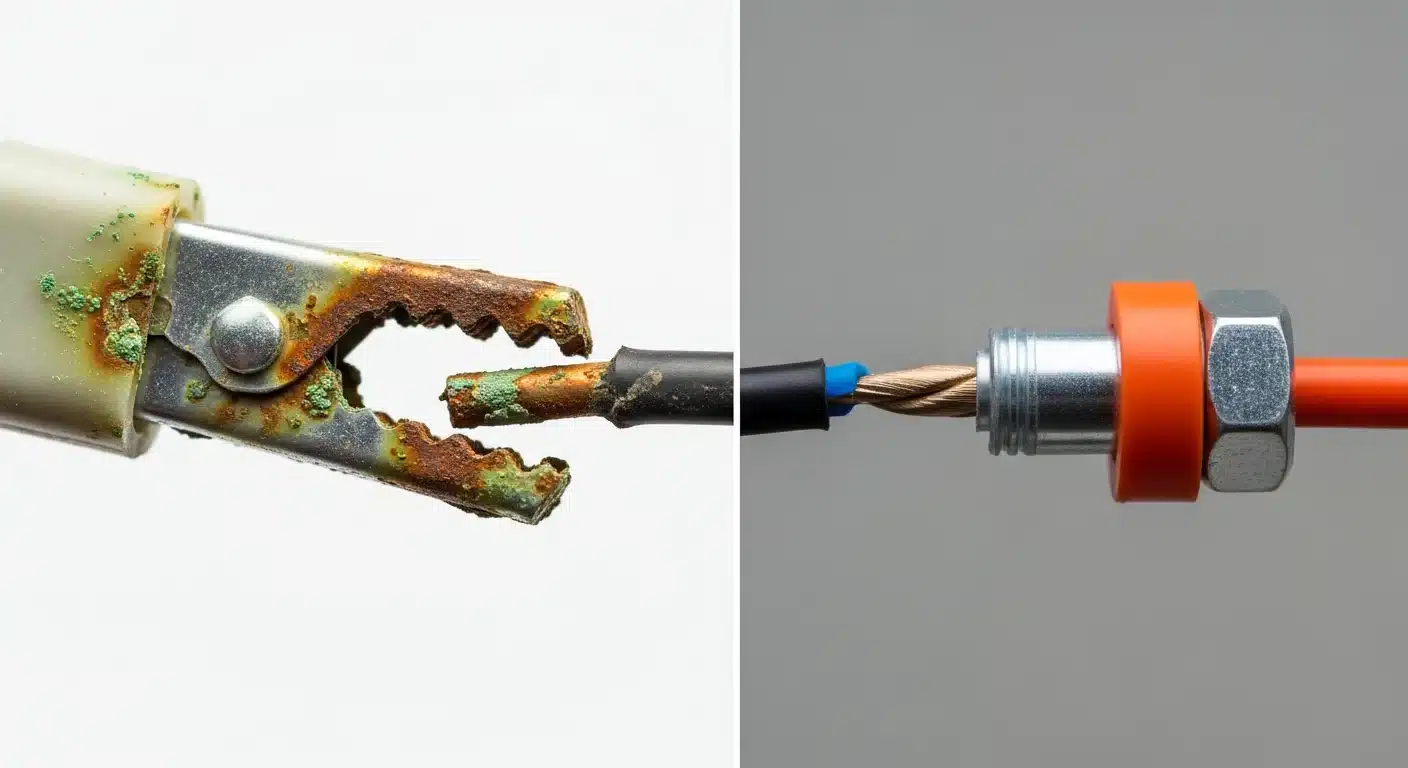
Many DIY kits use "Pierce Point" or "Vampire" connectors that stab into the main wire. Over time, moisture corrodes the copper at the pierce point, creating high resistance and eventual failure.
The Professional Fix:
1. Dig up the connection at the base of the fixture.
2. Cut off the old connectors.
3. Strip the wires to expose fresh copper.
4. Use Direct Burial (DB) Silicone-Filled Wire Nuts (e.g., King Innovation DryConn). These are waterproof and prevent corrosion.
If your lights are on but appear dim or yellow (for halogen) or are flickering (for LED), you are likely dealing with low voltage lighting troubleshooting related to voltage drop.
Voltage drop occurs when the wire run is too long or the wire gauge is too thin for the electrical load.
The formula for voltage drop $V_{drop}$ in a 2-wire AC system is:
$$ V_{drop} = \frac{2 \cdot L \cdot I \cdot R}{1000} $$
Where:
If the voltage at the last fixture drops below 10.5V (for Halogen) or 9V (for some LEDs), the lights will fail or flicker.
Solution:

If your landscape lights won't turn off and stay on 24/7, the culprit is usually the photocell.
Photocells are designed to fail in the "Closed" (ON) position. This is a safety feature so that if the sensor breaks, your property isn't left in the dark.
If the system runs for 15-20 minutes and then shuts off, only to turn back on later, you have a Thermal Overload.
This happens when the transformer is overloaded (Total Wattage > Transformer Rating) or if the transformer is in a location with poor airflow (like buried under mulch). The internal heat sensor trips, cools down, resets, and repeats the cycle.
Fix: Calculate your total wattage. Ensure it is less than 80% of the transformer's capacity. If you have a 300W transformer, do not exceed 240W of load.
If your lights cycle On-Off-On-Off every few seconds at dusk, you have a Photocell Feedback Loop.
Fix: Re-orient the photocell away from the lights or install a shield.
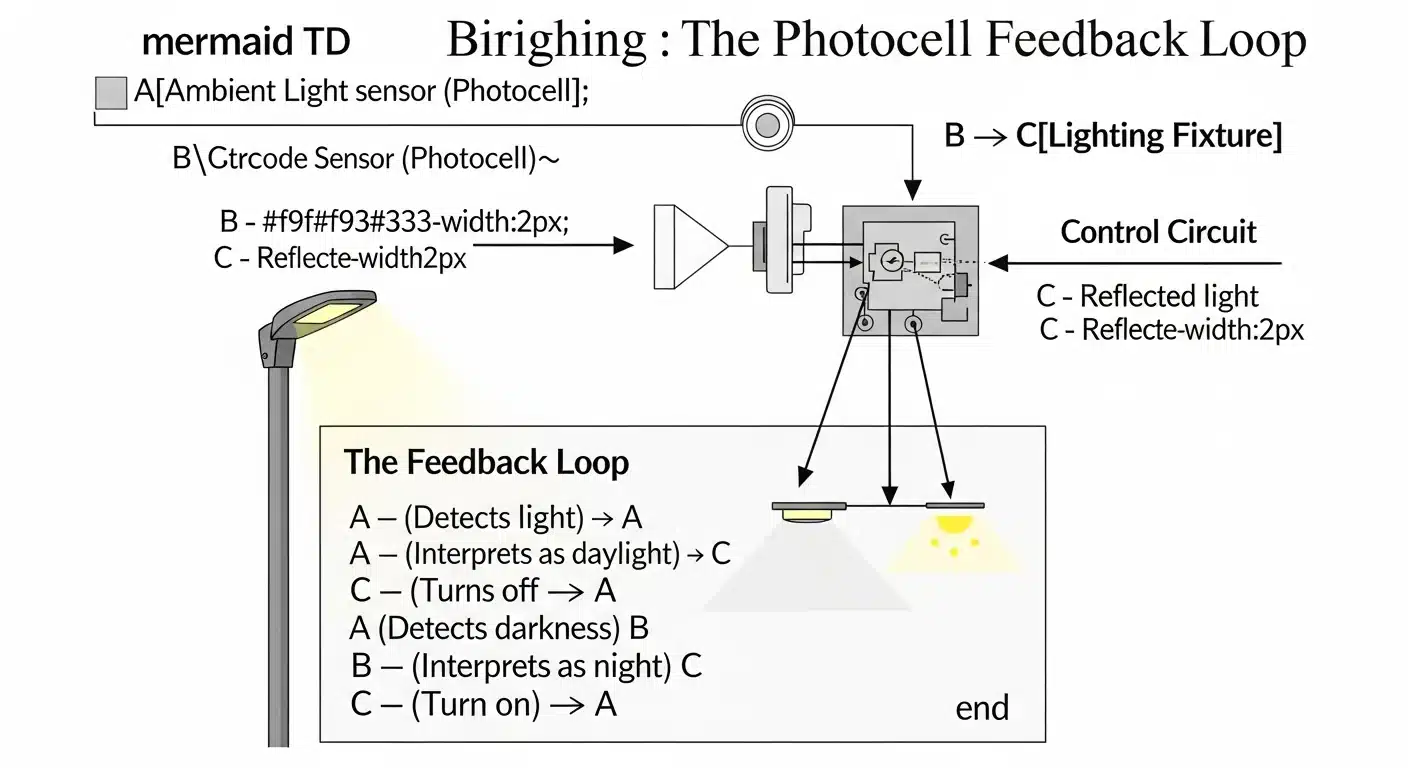
When performing Kichler troubleshooting, be aware of their distinct product lines.
These integrated fixtures do not have replaceable bulbs. If a Kichler Design Pro fixture fails, you must check the driver (electronics) inside. Often, these have a wide operating voltage (9V-15V). If they are not working, check the voltage at the fixture with a multimeter. If you have 12V at the wire but no light, the entire fixture must be replaced under warranty (Kichler offers long warranties on these).
Many Kichler transformers use a digital timer with an internal battery backup. If you experience a power outage and the battery is dead, the timer may reset to "OFF" or lose its programming. If your timer display is blank when the power is out, replace the internal button-cell battery.
If you are ready to fix landscape lighting yourself, follow this checklist to ensure you don't waste time.